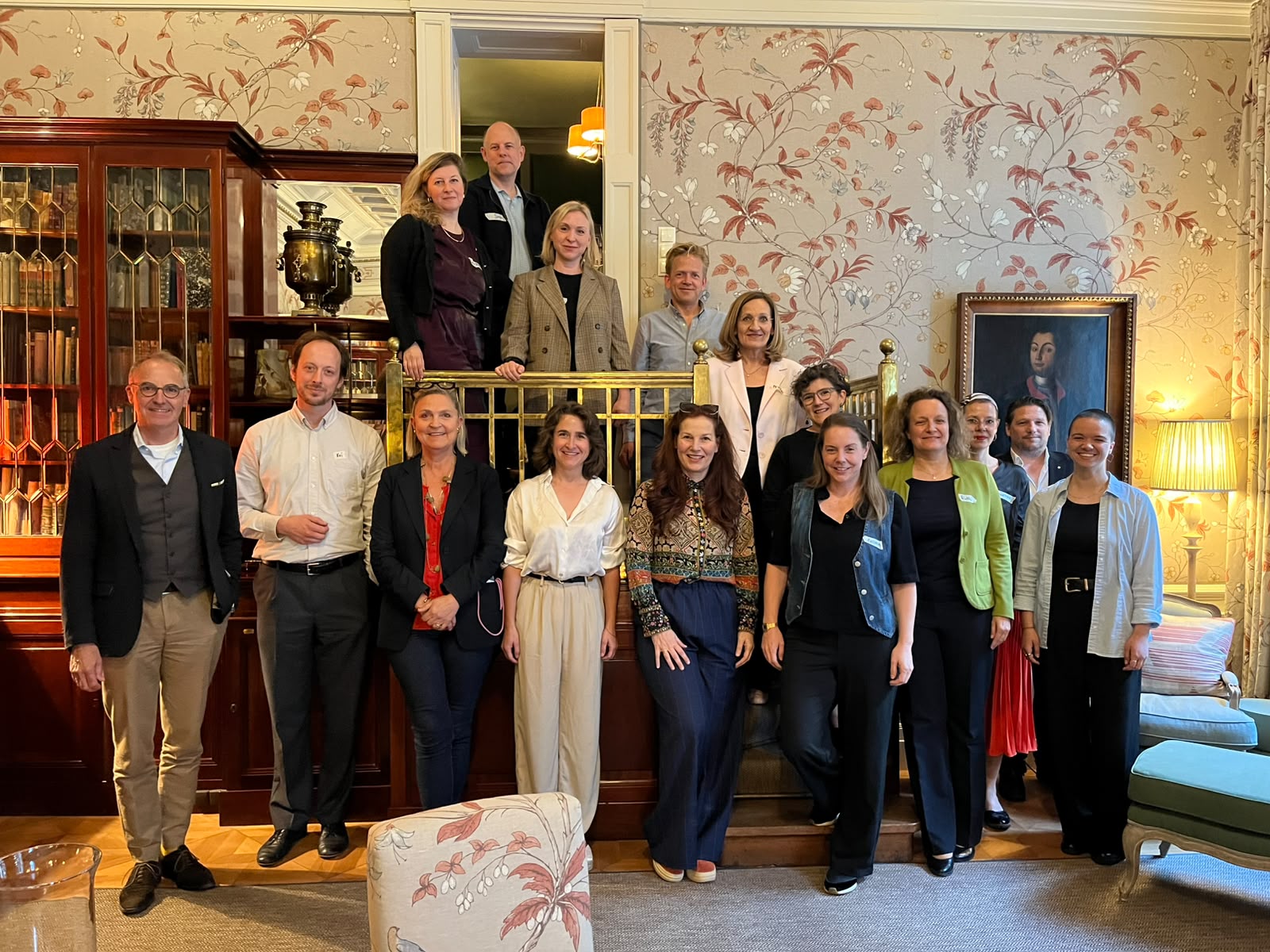
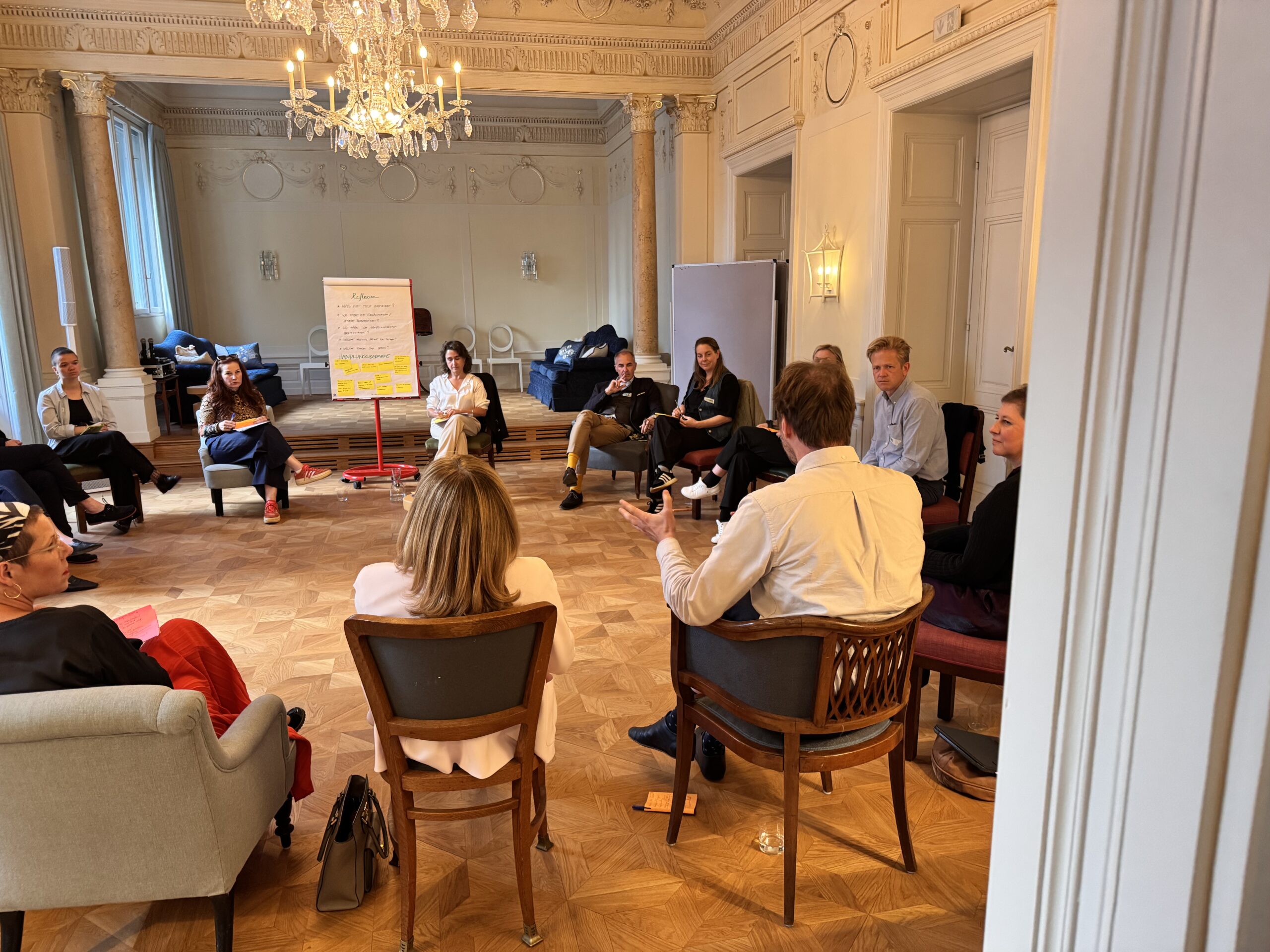
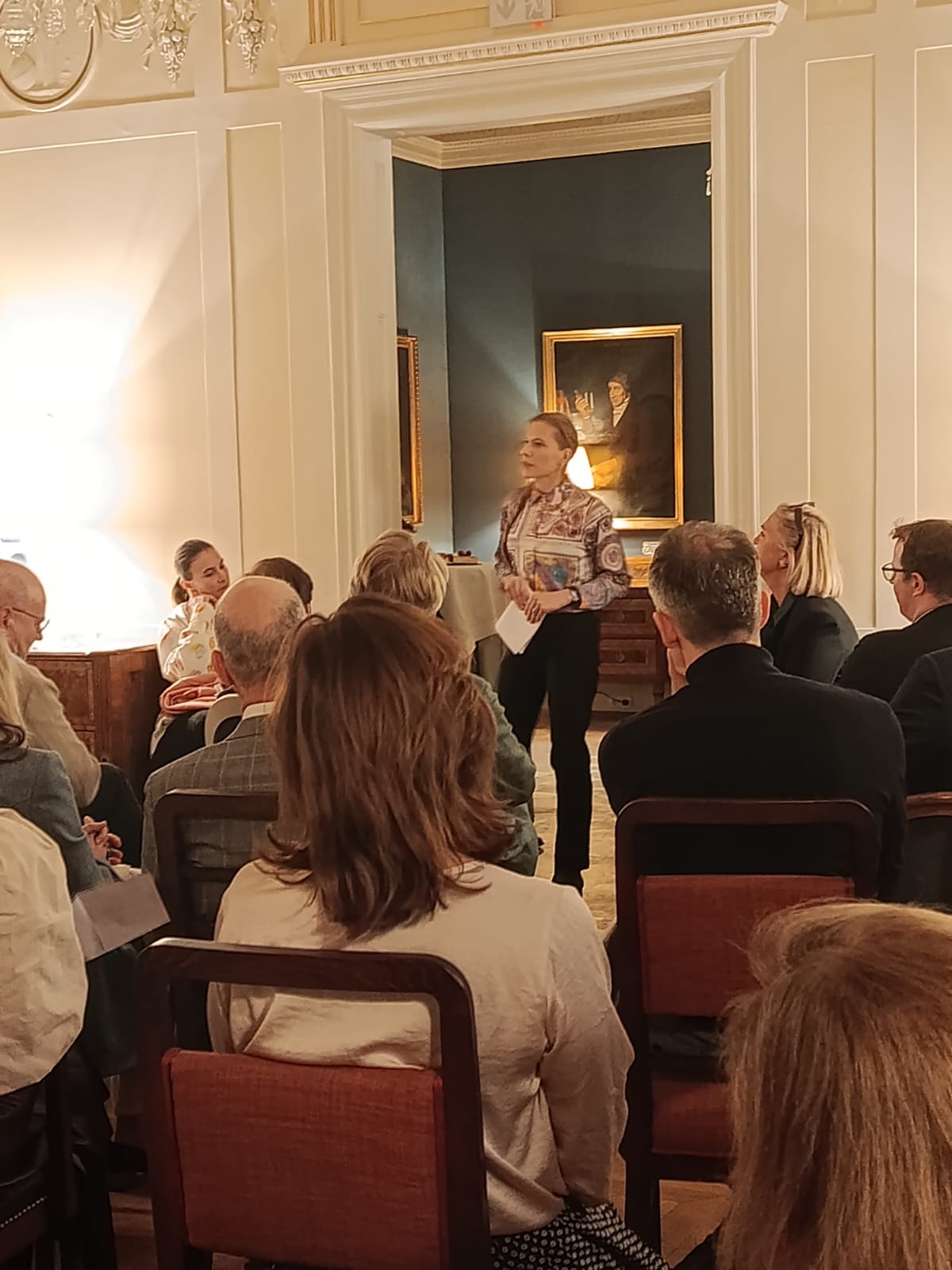
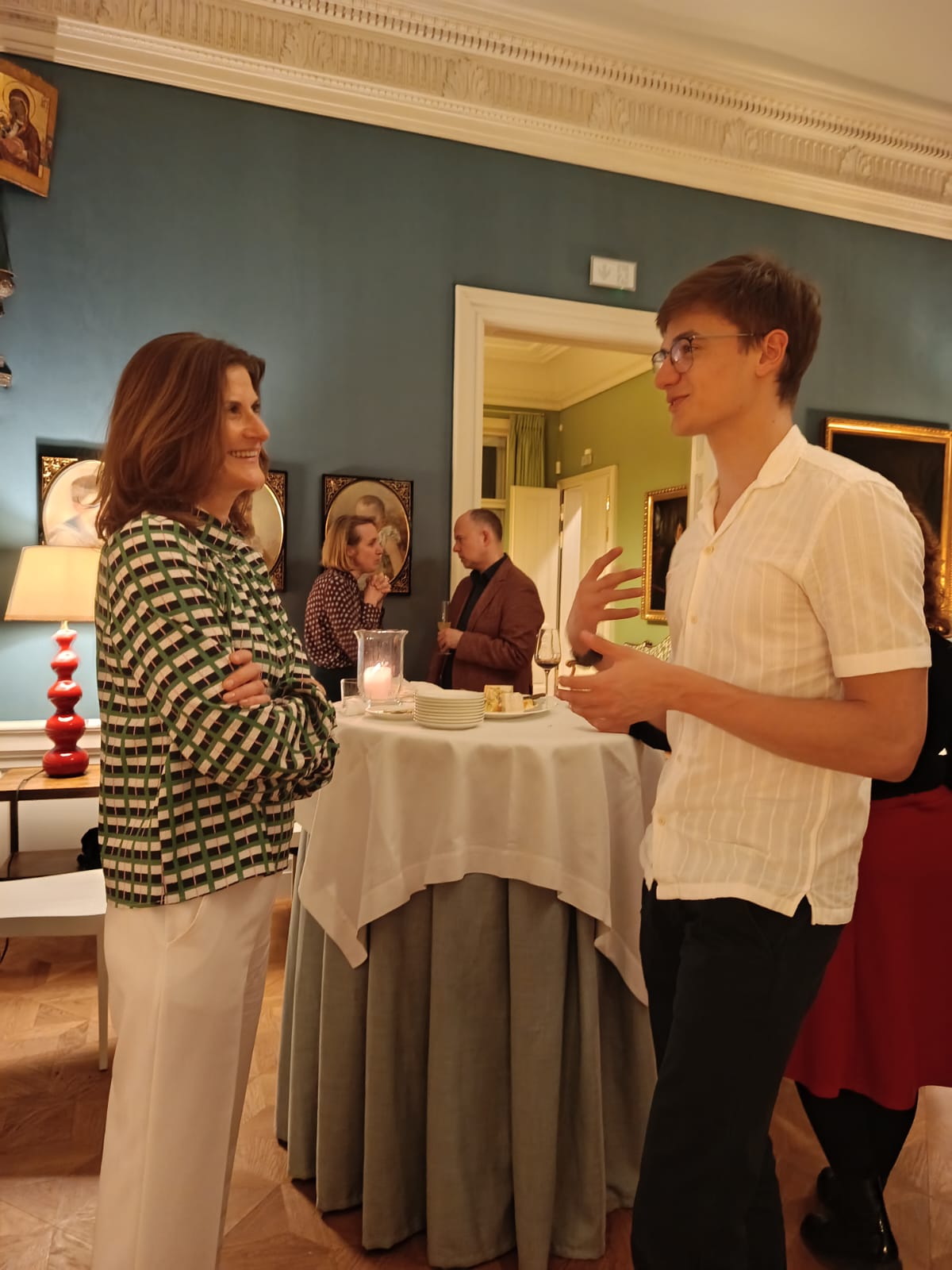
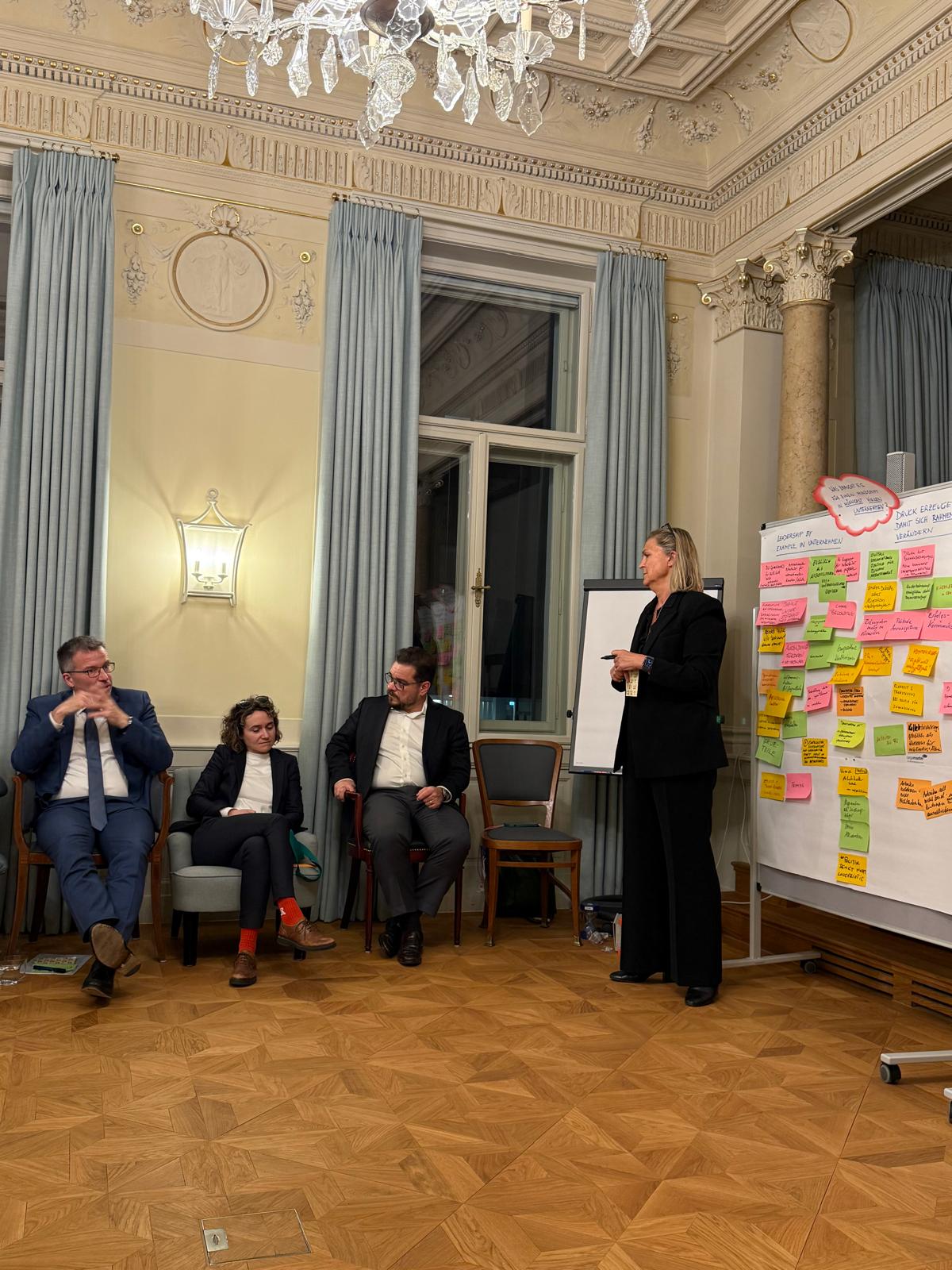
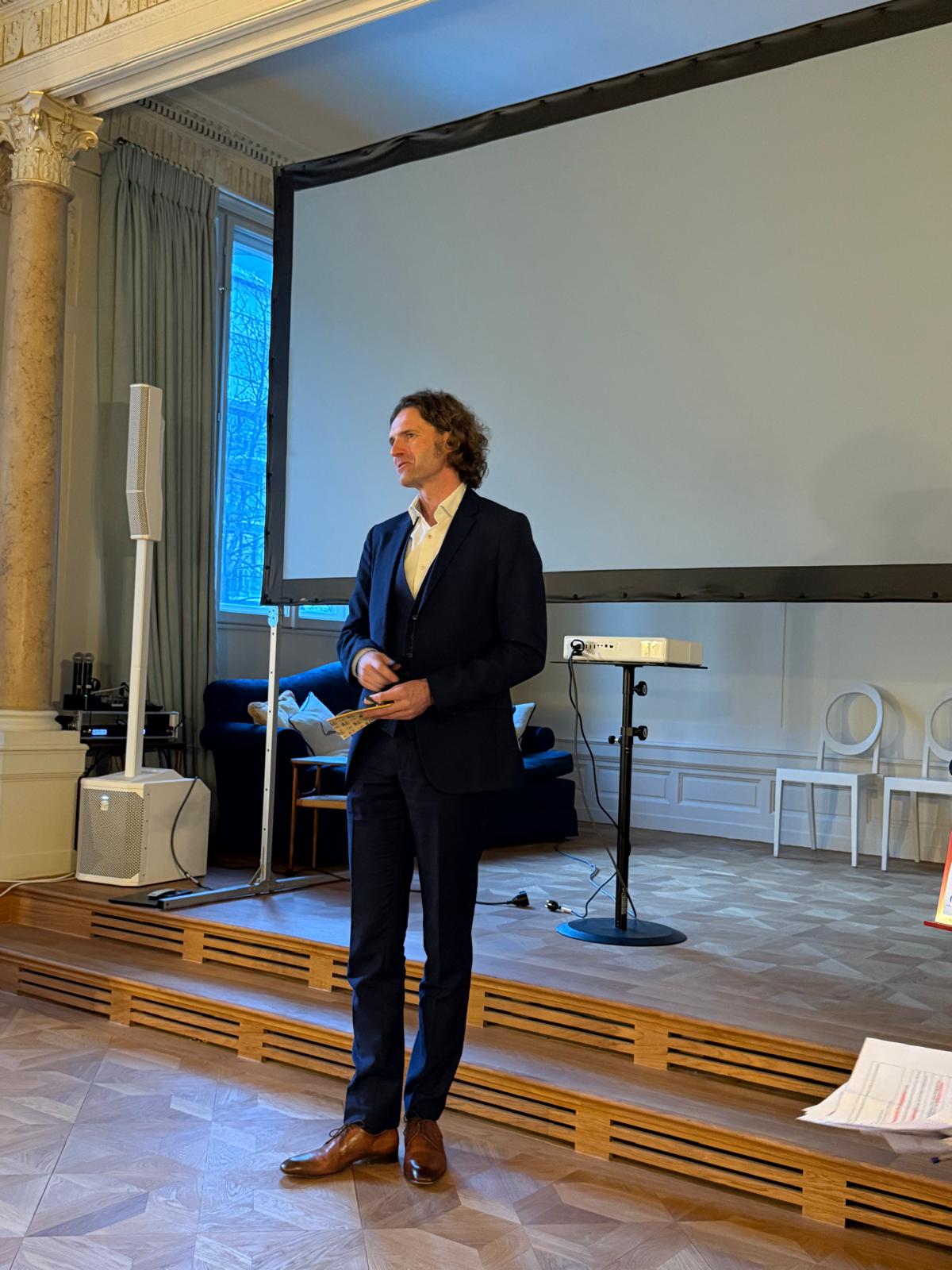
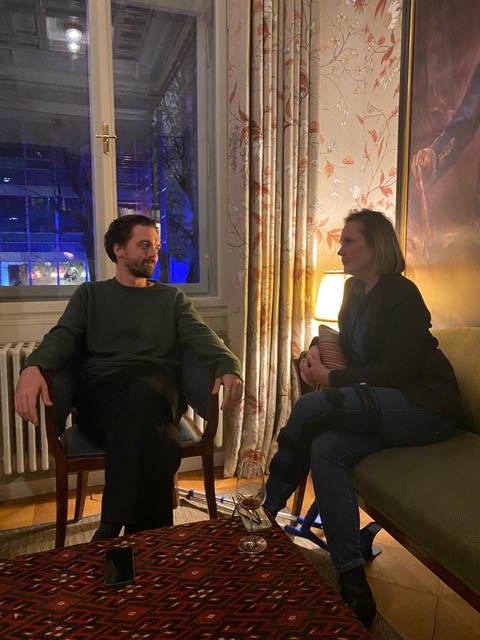
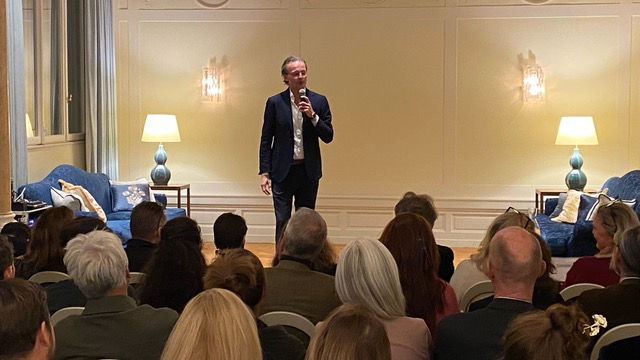
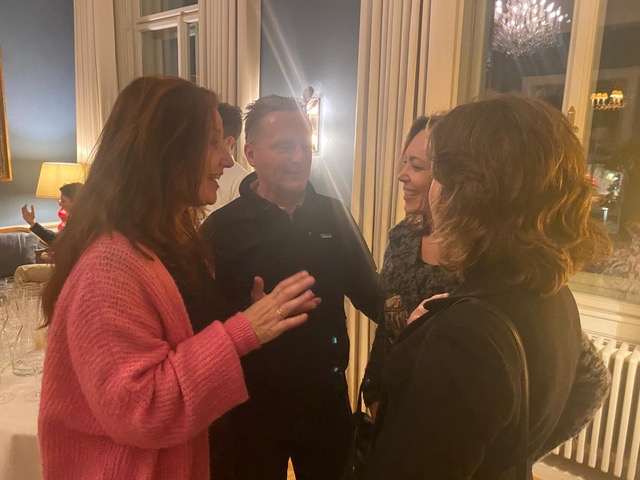
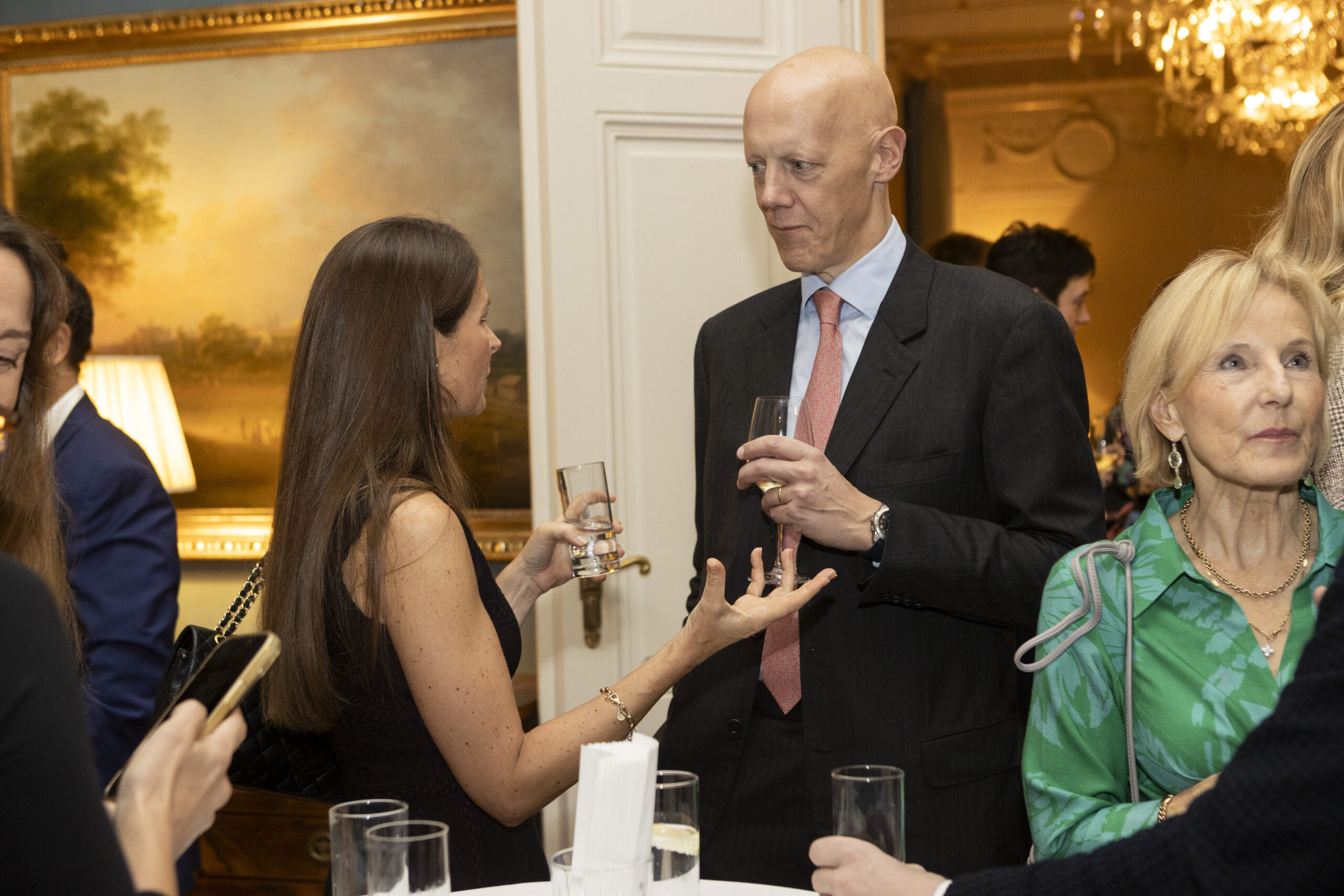
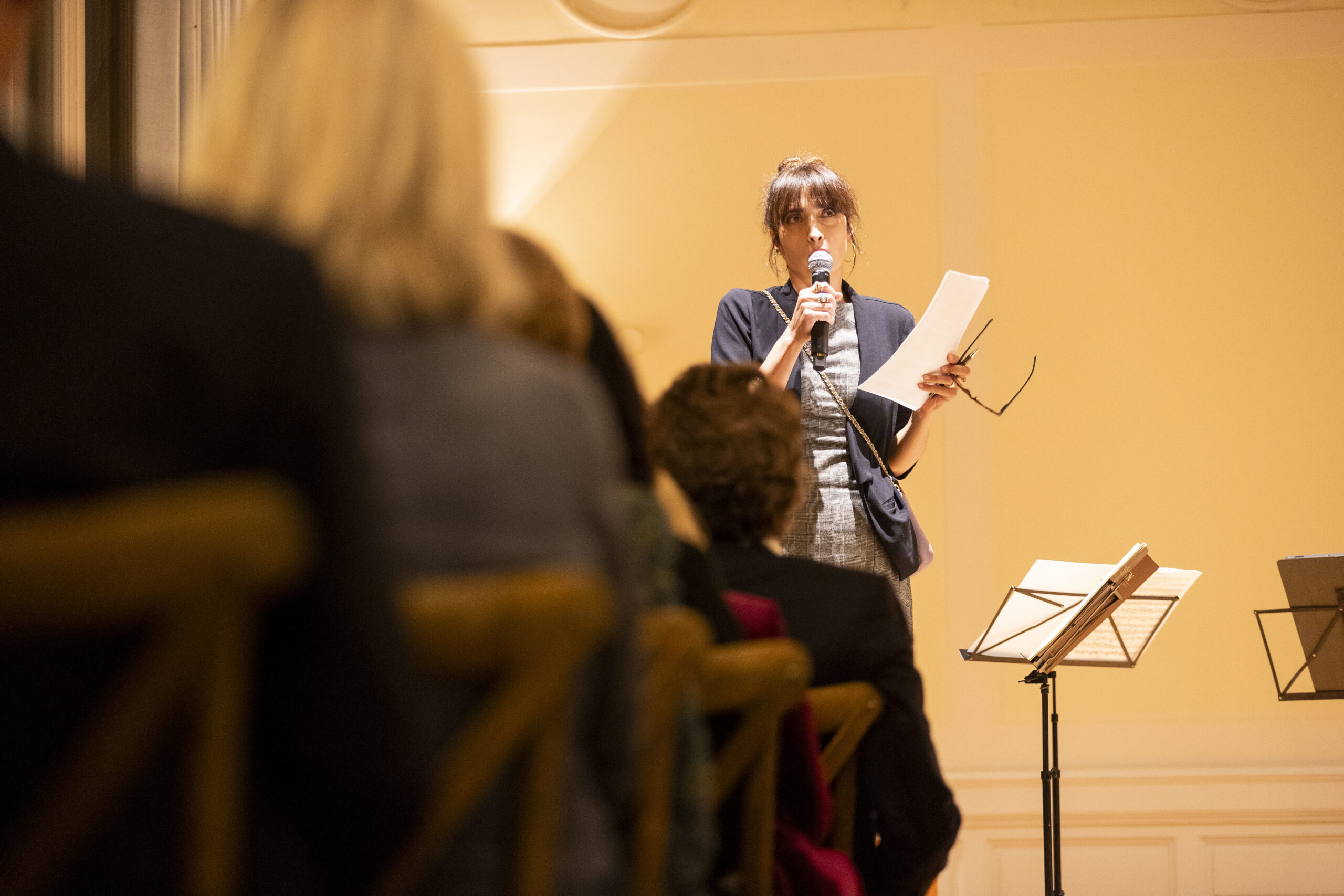
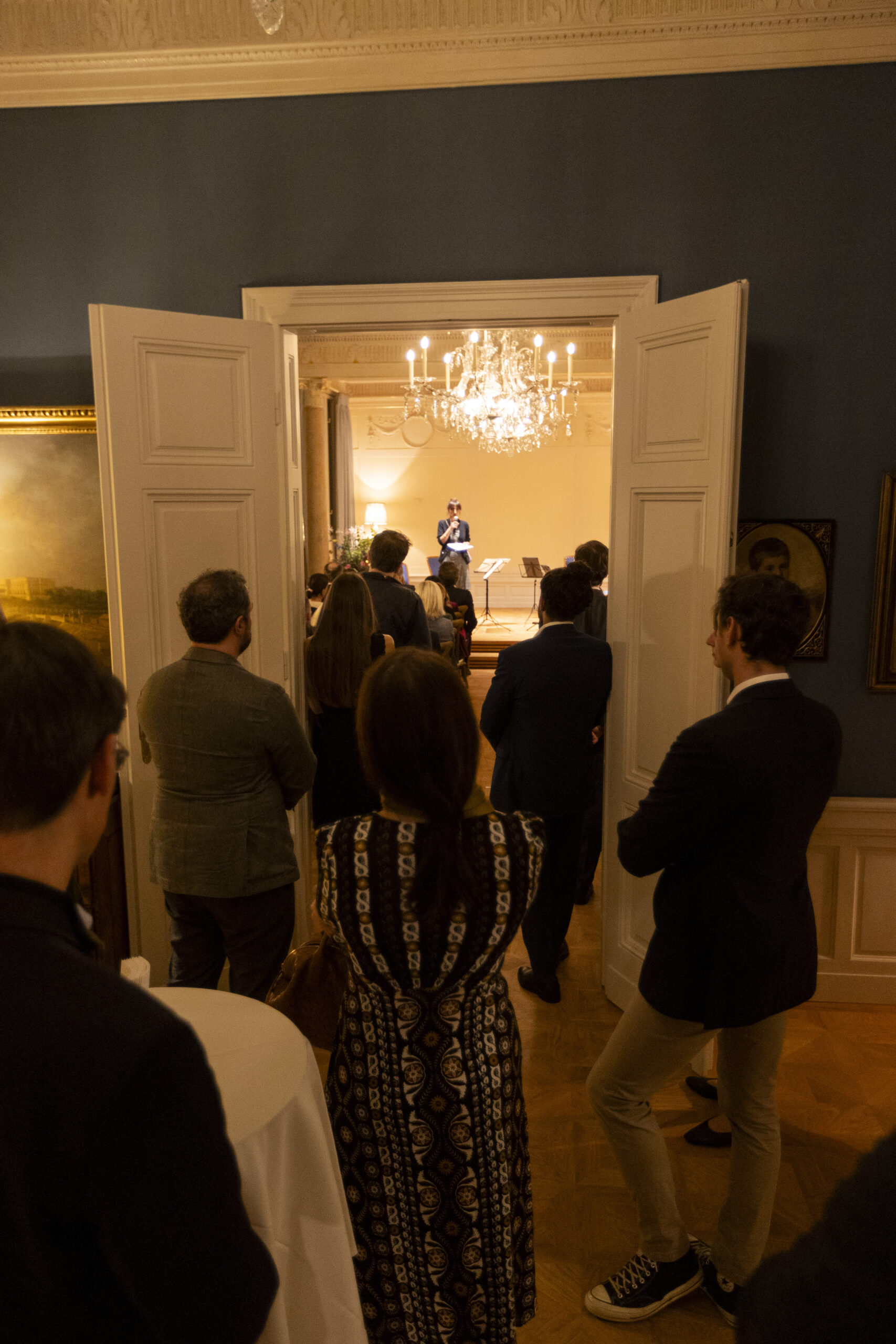
For generations, our home has welcomed leaders, change-makers and doers from all over Europe. It is our family's legacy to uphold this tradition of interaction, connection and building relationships.
By gathering people from diverse perspectives and backgrounds, Forum Razumovsky opens a space to imagine different possible futures.
In this space bold ideas can emerge, solutions can circulate and pathways for a fair and prosperous future are set.
Past
Events
The Art of Decision-Making – Rethinking Leadership in Culture
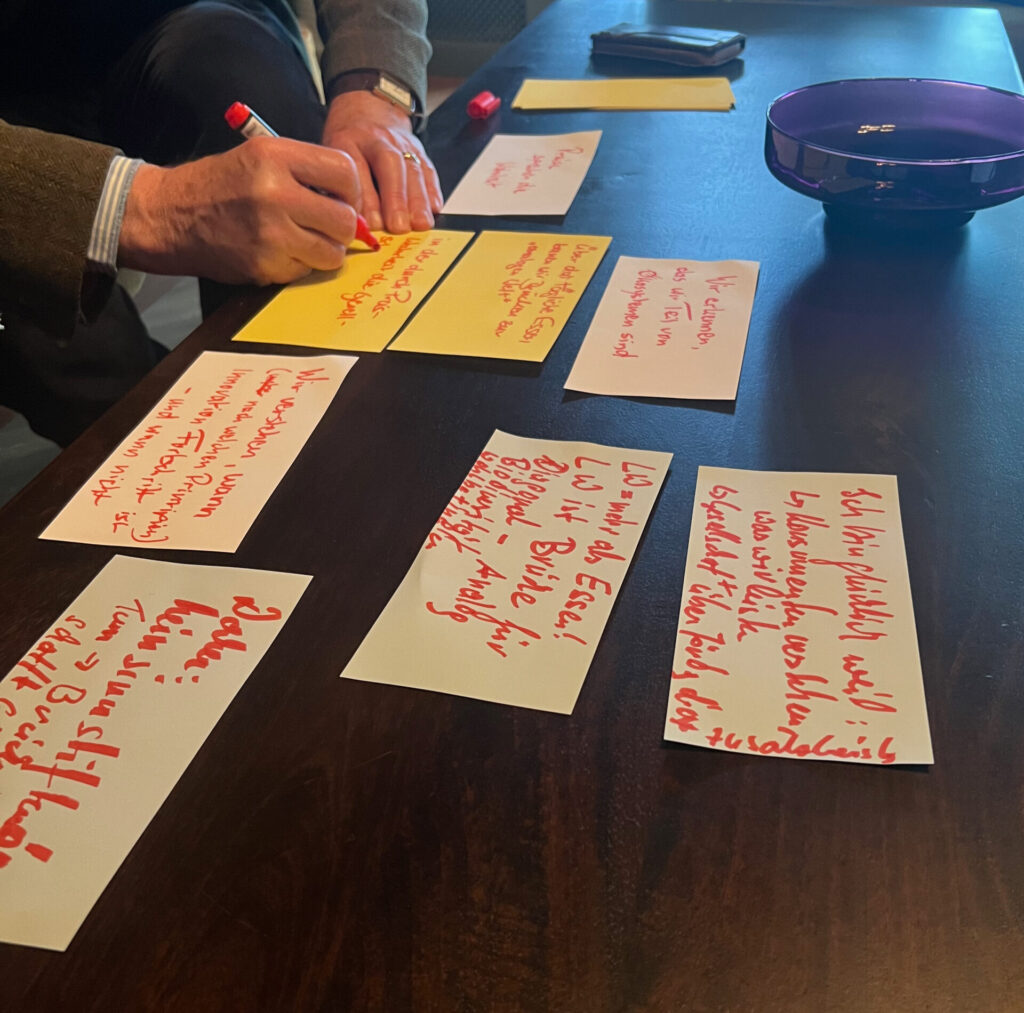
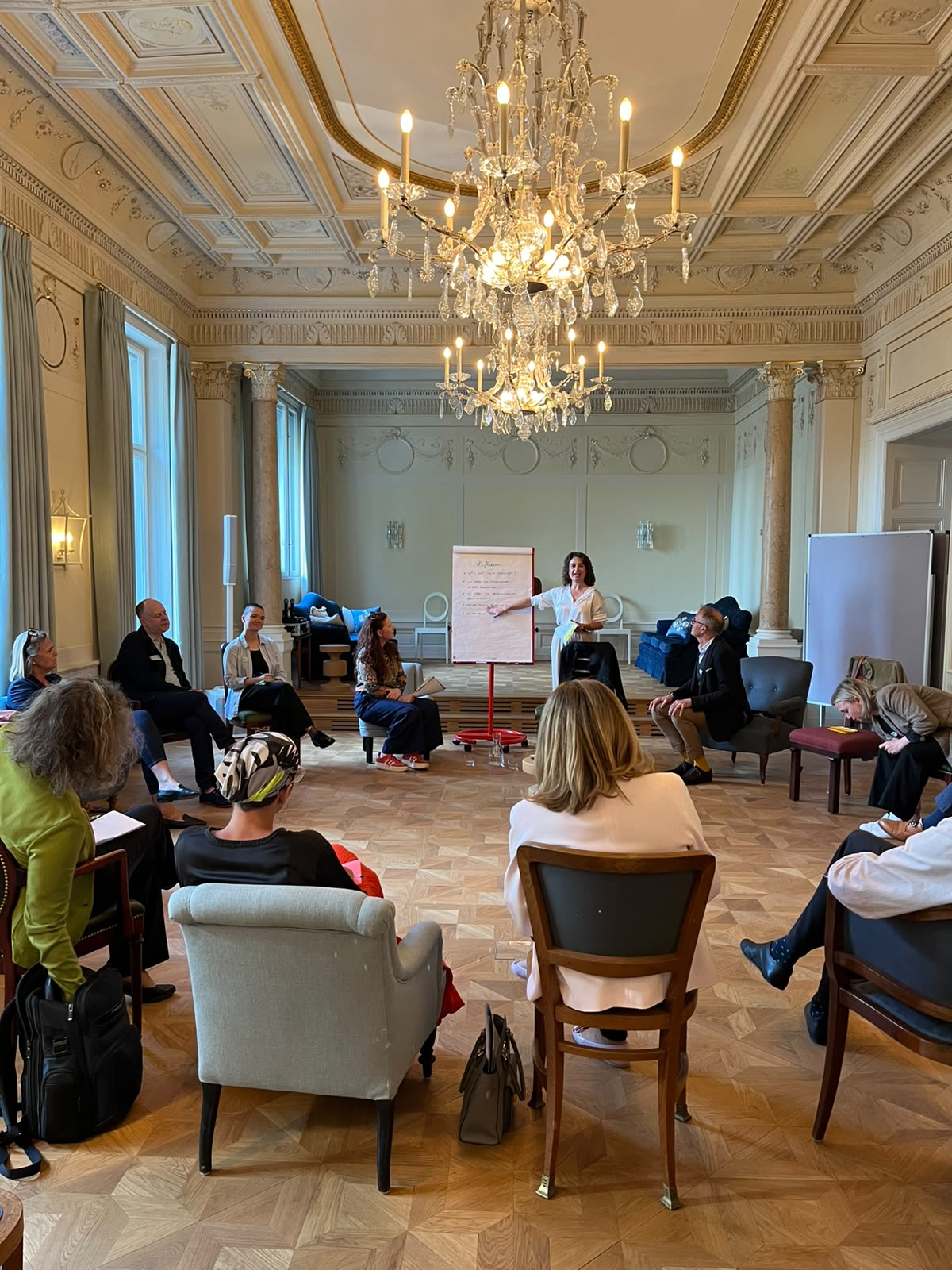
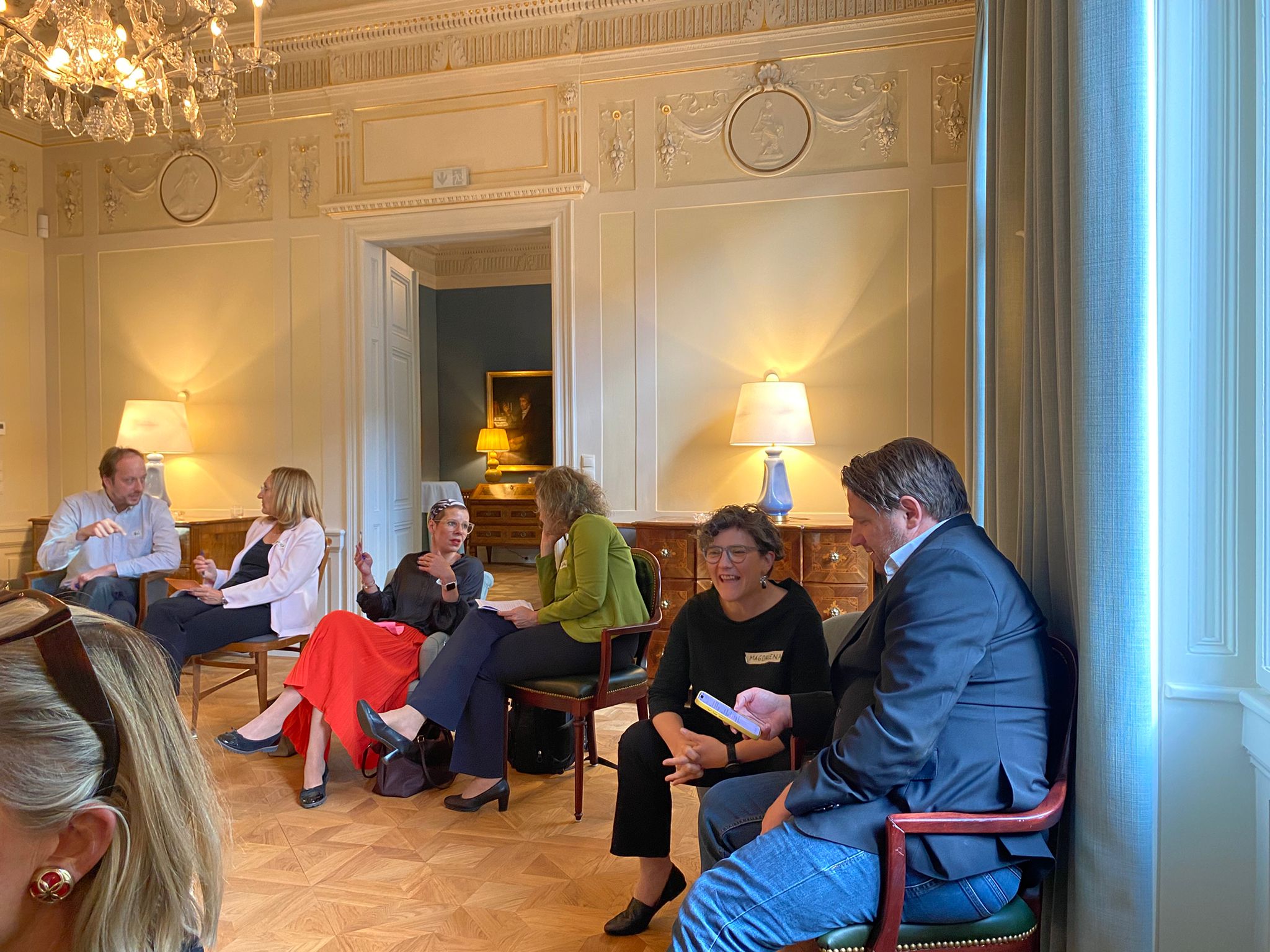
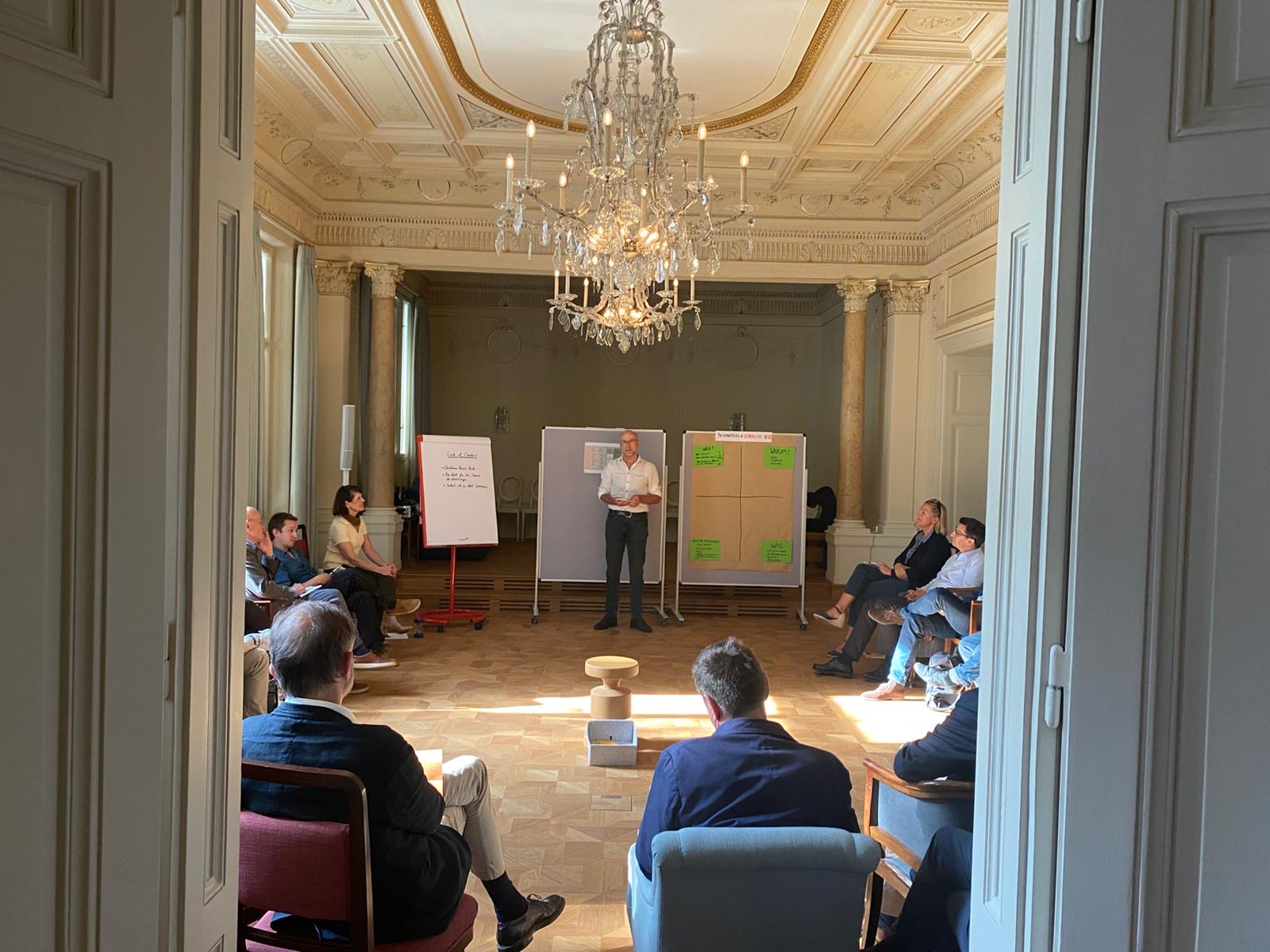
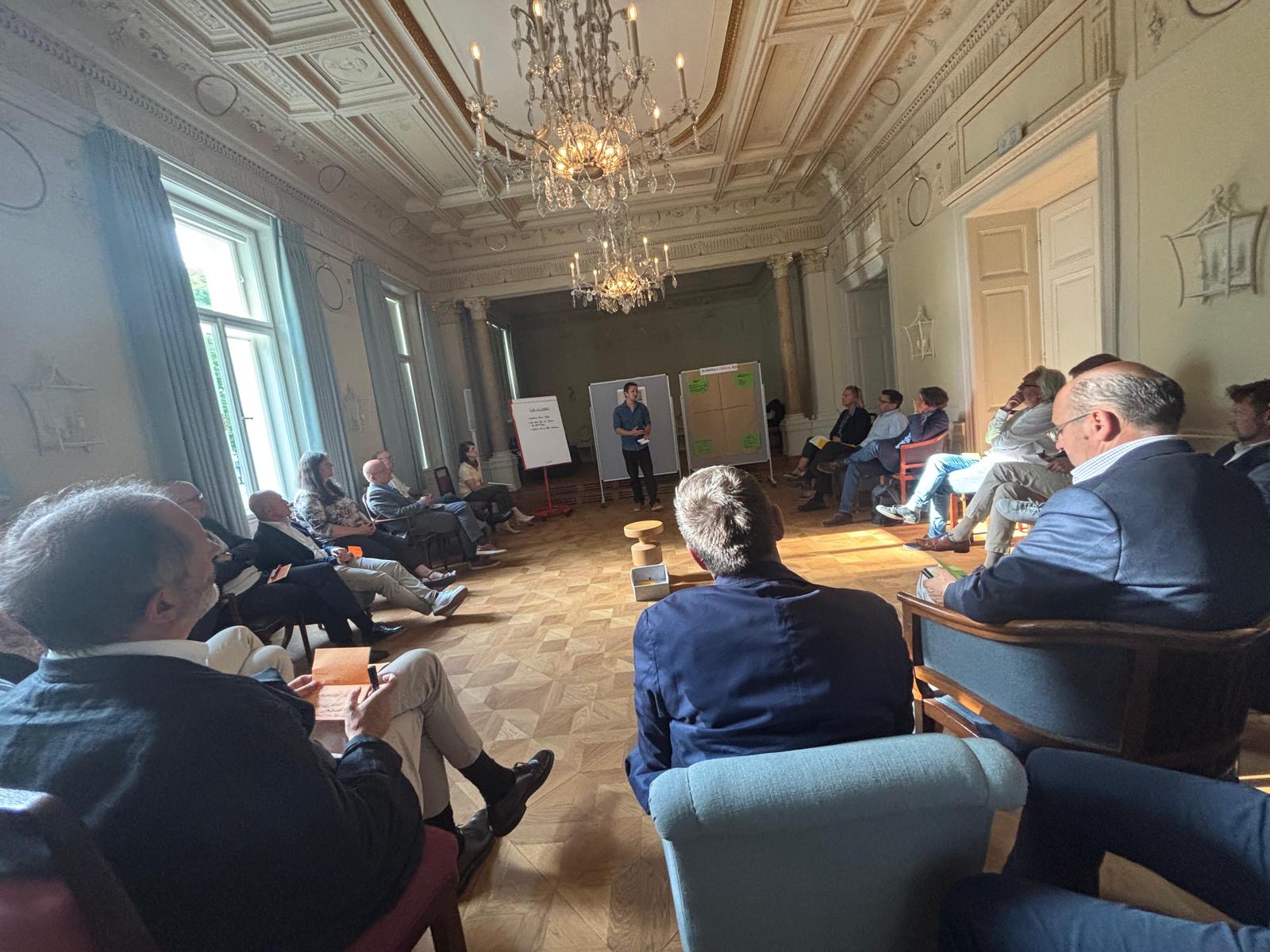
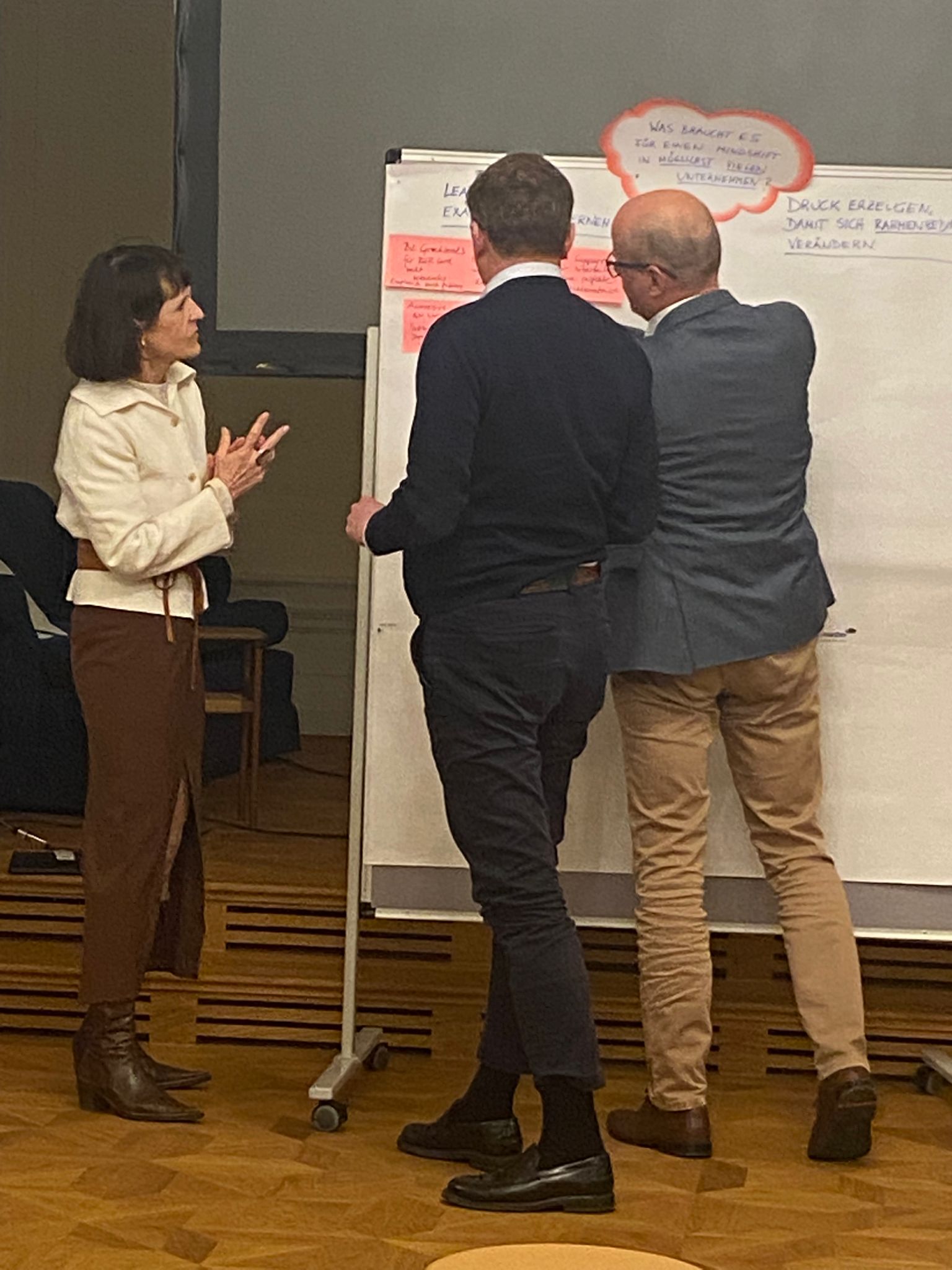
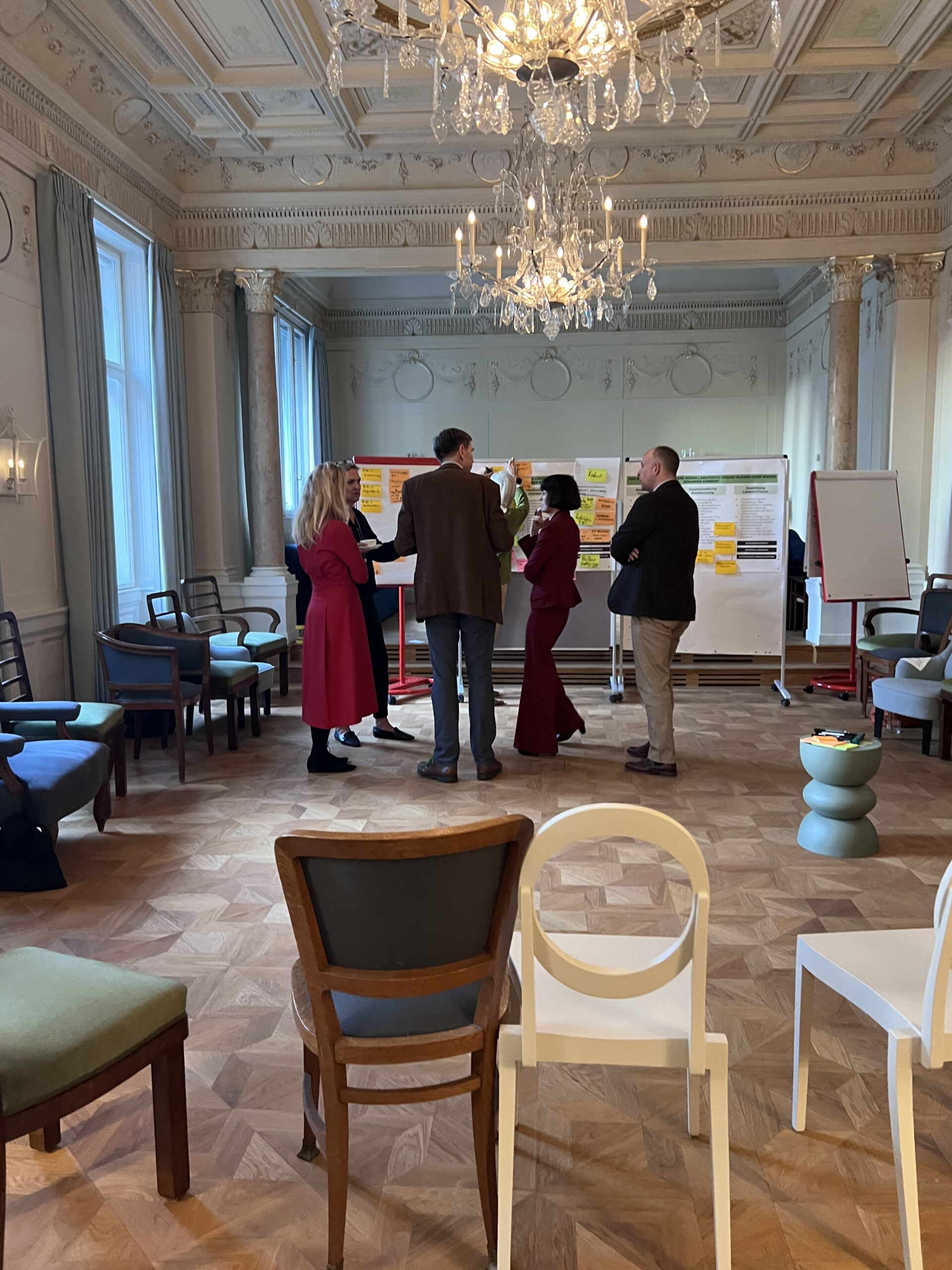
For the first time, the Forum Razumovsky brought together leading figures in cultural management. In our workshop, “The Art of Decision-Making – Rethinking Leadership in Culture,” participants discussed how change can be implemented in large cultural institutions.
Decisions in cultural institutions are often not very transparent and can sometimes be used as tools of power. Together, we explored new, more human approaches to leadership. How do we engage all employees? How can decisions be made more transparent? And how must leadership positions be filled with competent individuals in the future? The overall question is obvious: How can we rethink management in the cultural sector so that leadership teams are not shaped by internal conflict but remain focused on the work itself — the connection to staff, artists, and audiences? Only in this way can art remain relevant.
Magdalena Schnitzler from the German National Theatre and State Orchestra Weimar presented her institution as a best practice example and demonstrated how modern cultural management can already be implemented. Thanks to alma, the Alliance of Leaders in Arts and Music, for their organizational support and cooperation.
Next Steps: The Razumovsky Forum will attempt to identify clear systemic pain points. We will explore how we can further refine the topic together with the participants and new stakeholders and how we can take our dialogue to the next level.
June
2026
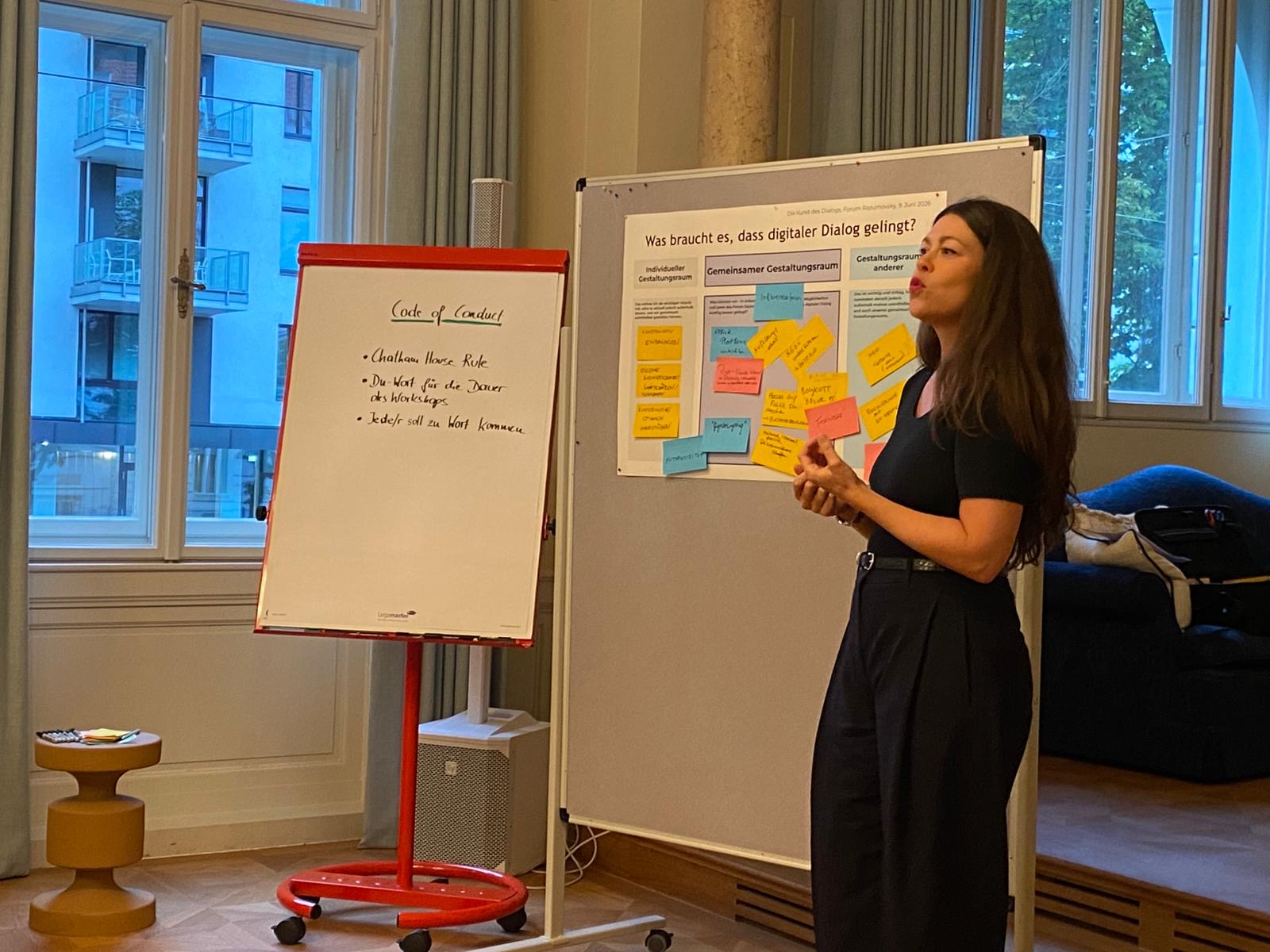
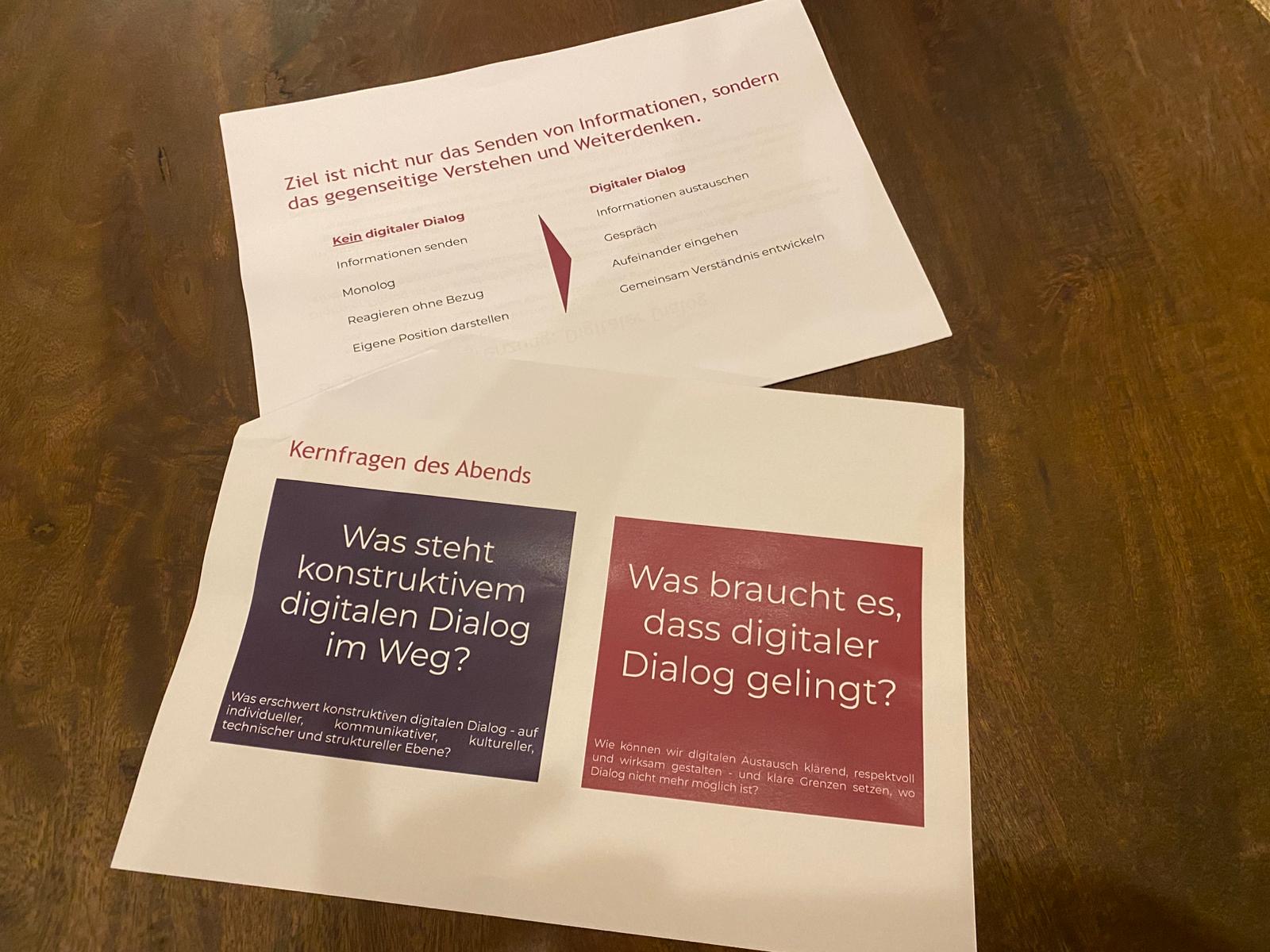
The Art of Dialogue in the Age of Digitalism
The Art of Dialogue in the age of Digitalism
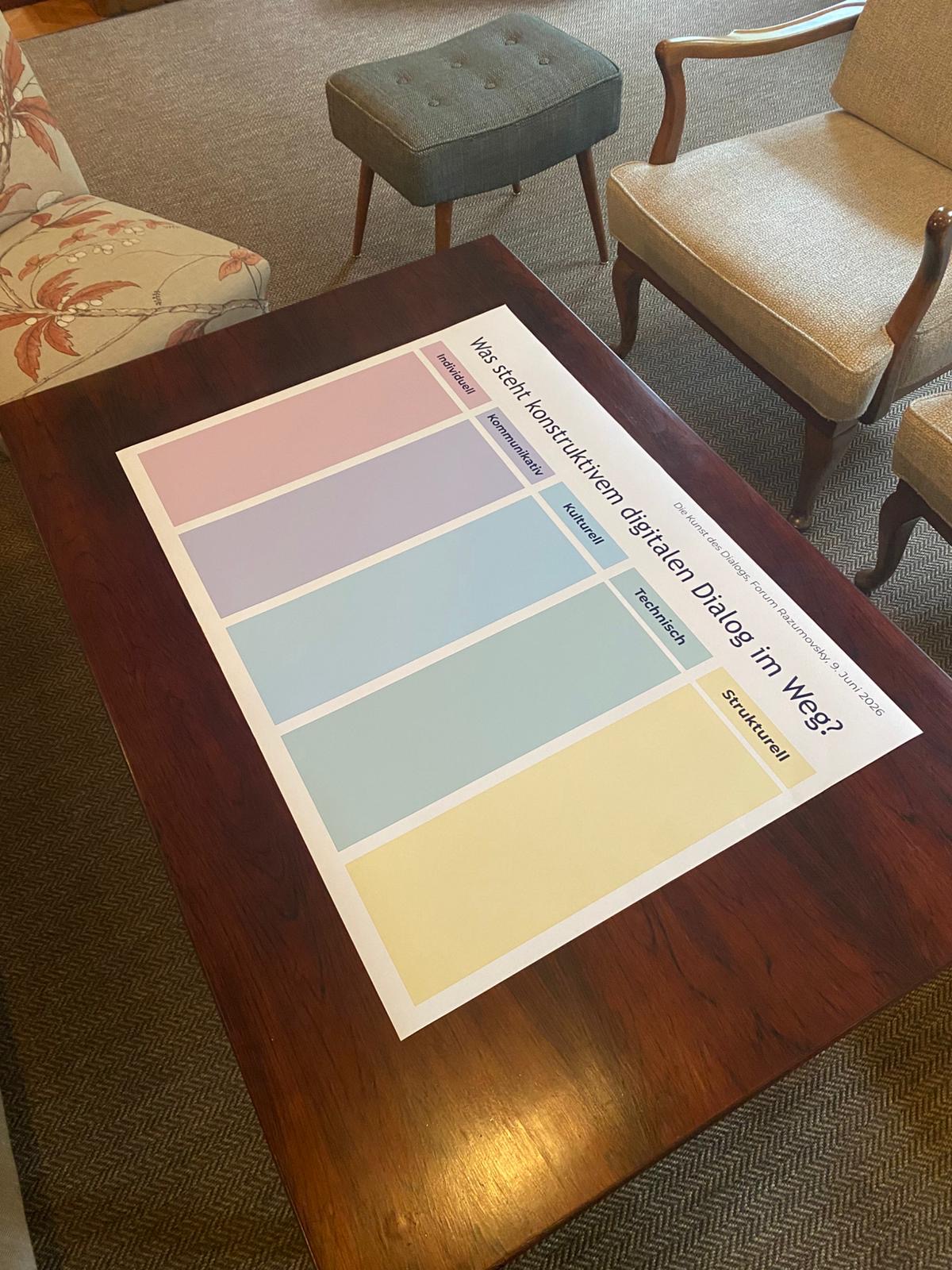
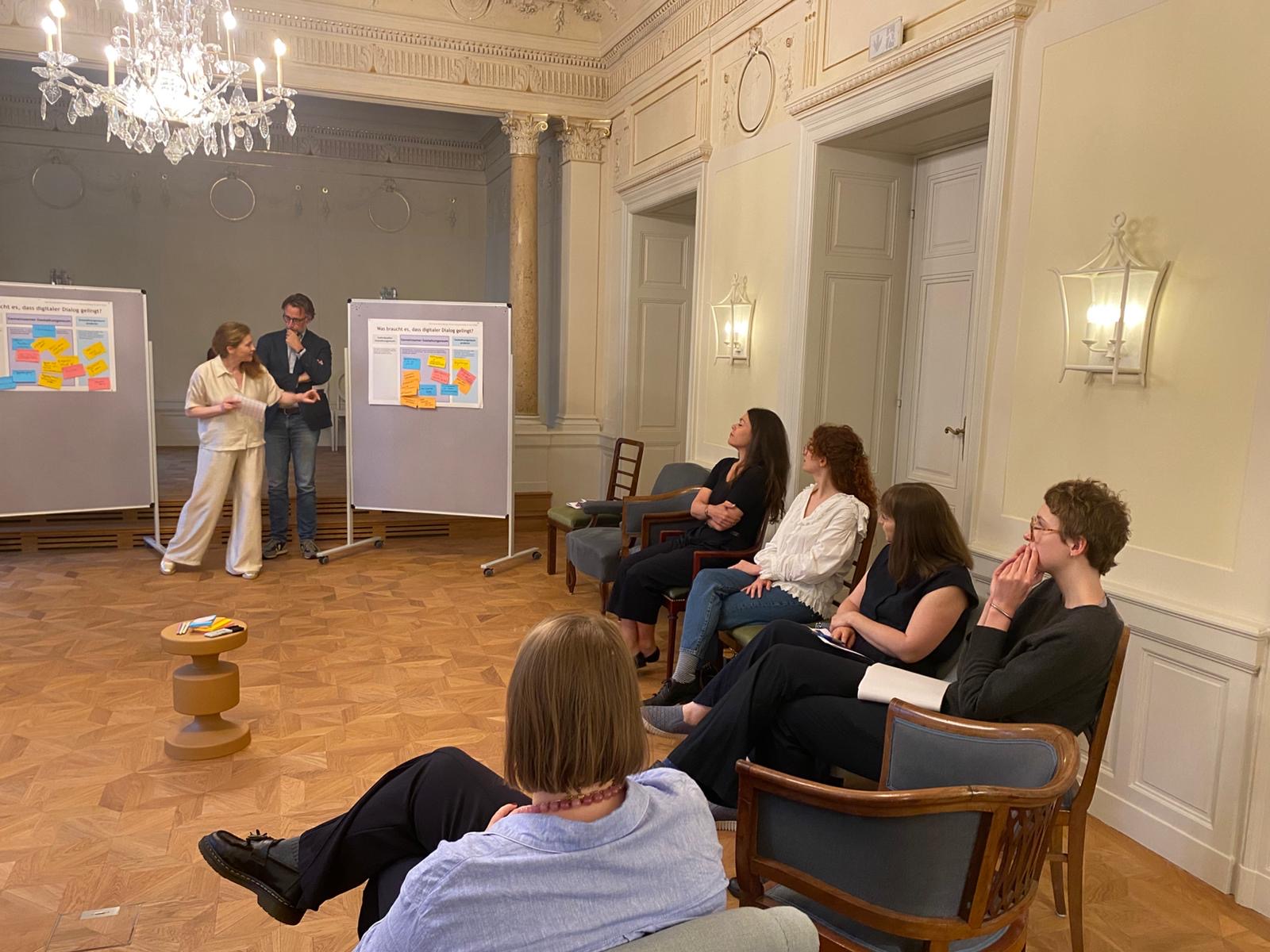
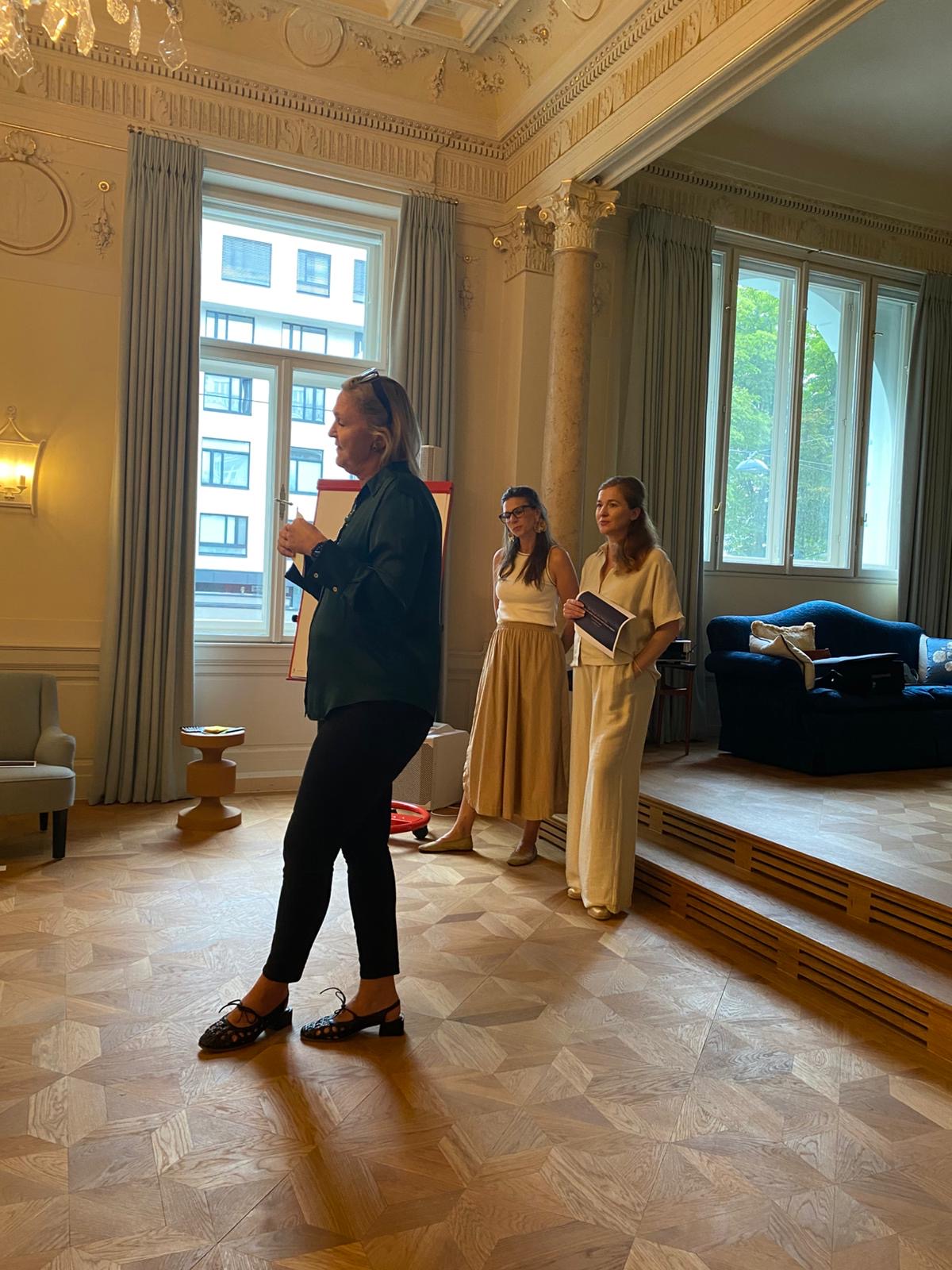
In our workshop “The Art of Dialogue in the Age of Digitalism” journalists, teachers, influencers, media experts, scientists and students gathered. We discussed the barriers that prevent genuine dialogue in social networks and digital communication. Often, constructive exchange doesn’t take place online. Instead, it’s a matter of disseminating entrenched opinions, and communication is seen as a one-way street. This leads to siloed thinking.
We were able to clearly demonstrate that, in addition to technical factors such as dependence on algorithms, there is also a lack of well-curated platforms that foster constructive dialogue. Furthermore, everyone must take proactive steps to improve the online atmosphere. More Educational work for society as a whole is necessary.
Next steps: The Forum Razumovsky is investigating which stakeholders can be brought together to create leverage that will also bring this mind shift to the wider public. We are connecting the dots!
June
2026
Healthier Soils for Future Generations 3
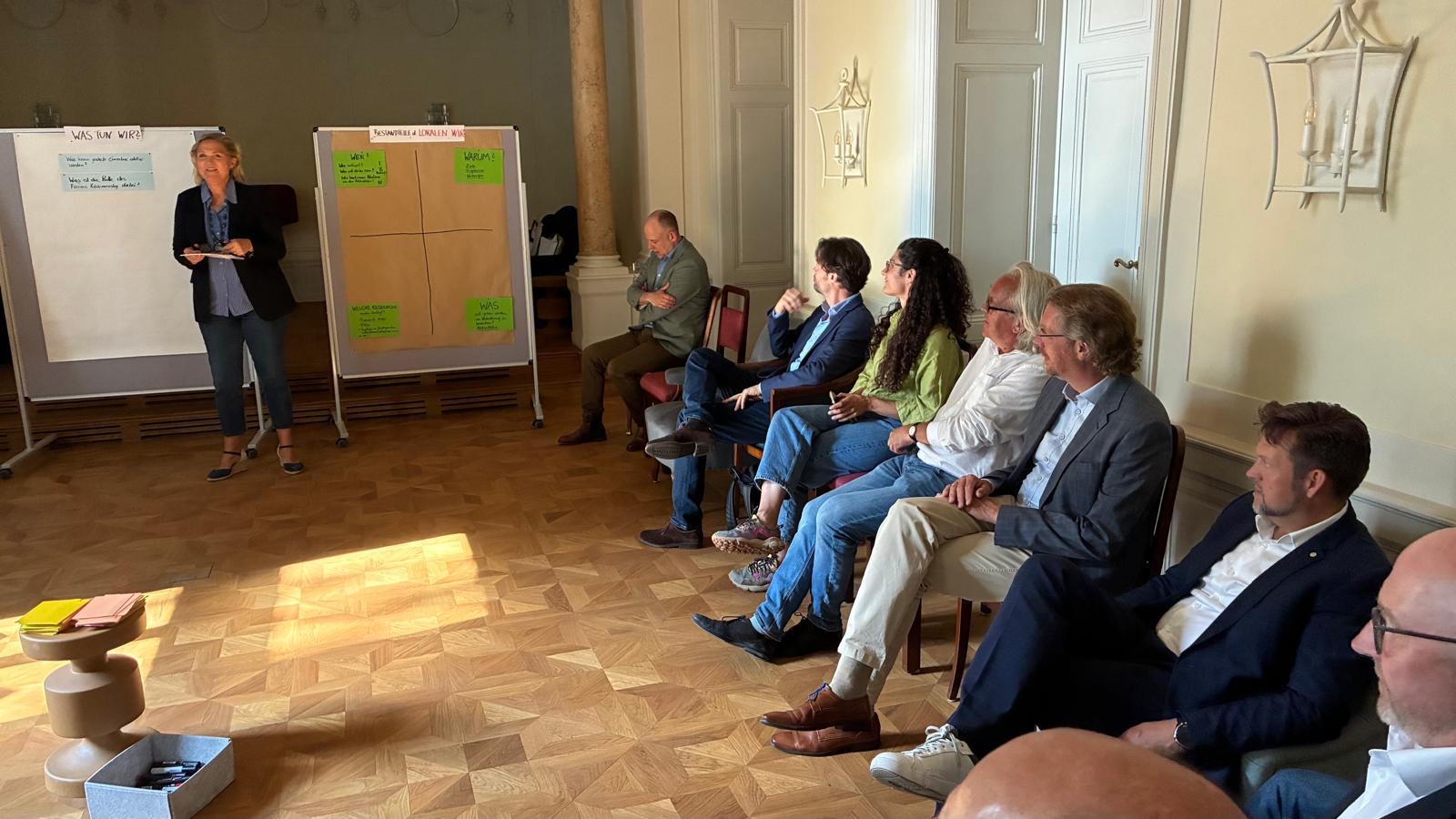
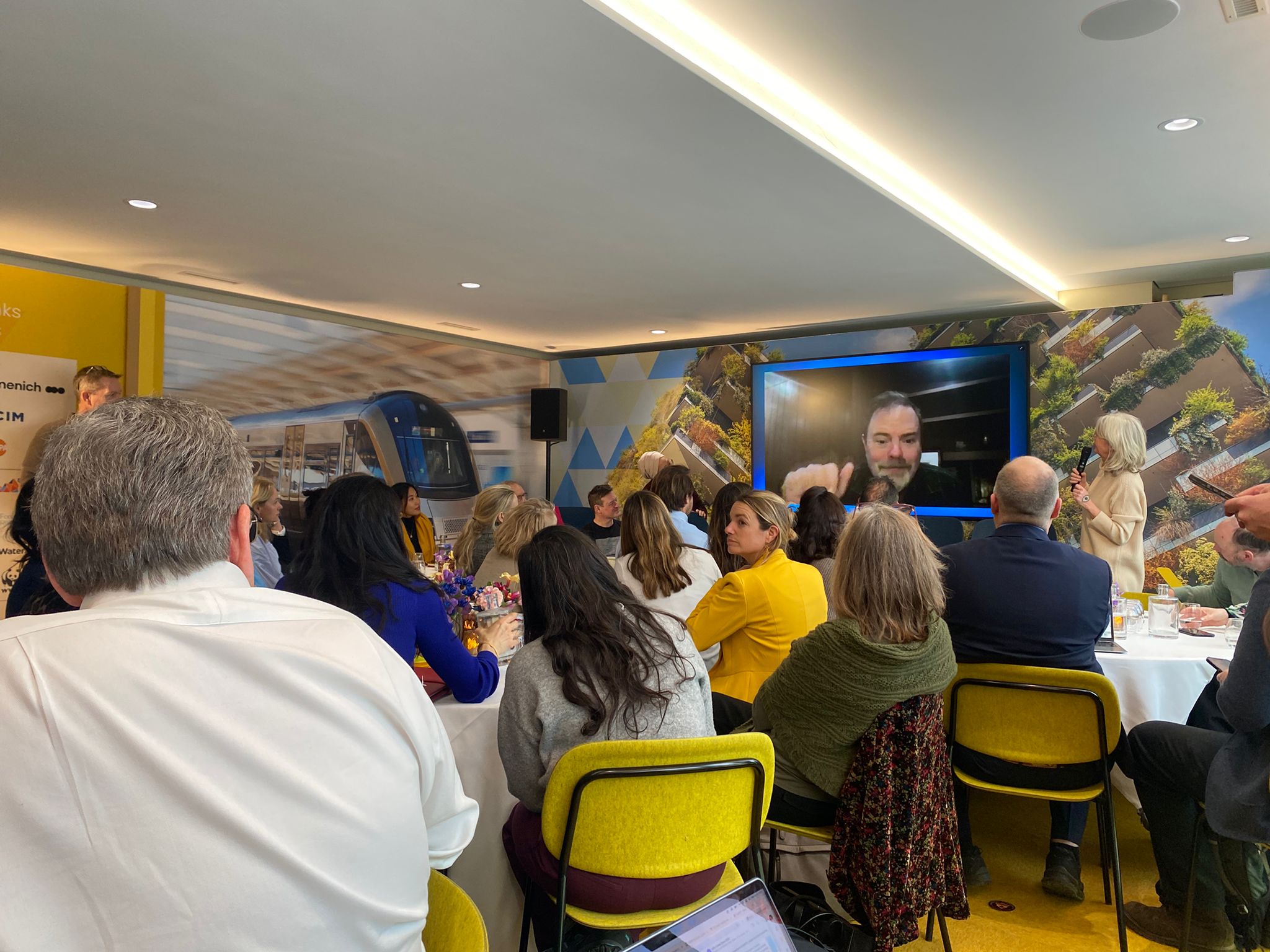
With the third roundtable in our “Healthier Soils for Future Generations” series, we’ve entered a completely new phase. For the first time, in addition to farmers, producers, and NGOs, we expanded the discussion to include stakeholders from administration, retail, and institutions.
Thanks to our three fantastic keynote speakers. Together, we explored how to create a “Local We” around sustainable agriculture. Willem Ferwerda, founder of the Commonland Foundation, provided an overview of the relevance of regions and landscapes. Sepp Braun, consultant for Regenerate, presented the “Regenerate” project from the Lake Constance region. He offered insights into the financing of additional eco-services by local businesses and other stakeholders and discussed consumer engagement. Ivo Degn, from Re:Source, spoke about the various roles within local agricultural networks and the particular importance of a coordinator.
The subsequent plenary discussion revealed the many aspects that need to be considered. The entire society must be engaged as a partner in shaping the future of agriculture. Bottom-up models are more effectivethan top-down approaches.
Next steps: After a detailed mapping of existing projects and funding sources, we will investigate what opportunities are available in Austria and Central Europe. The journey towards a “Local We” continues!
June
2026
Music & Dialogue: “Human Interaction – Where Purpose Begins”
The second evening of our “Music and Dialogue” series focused on “Human Interaction – Where Purpose Begins”.
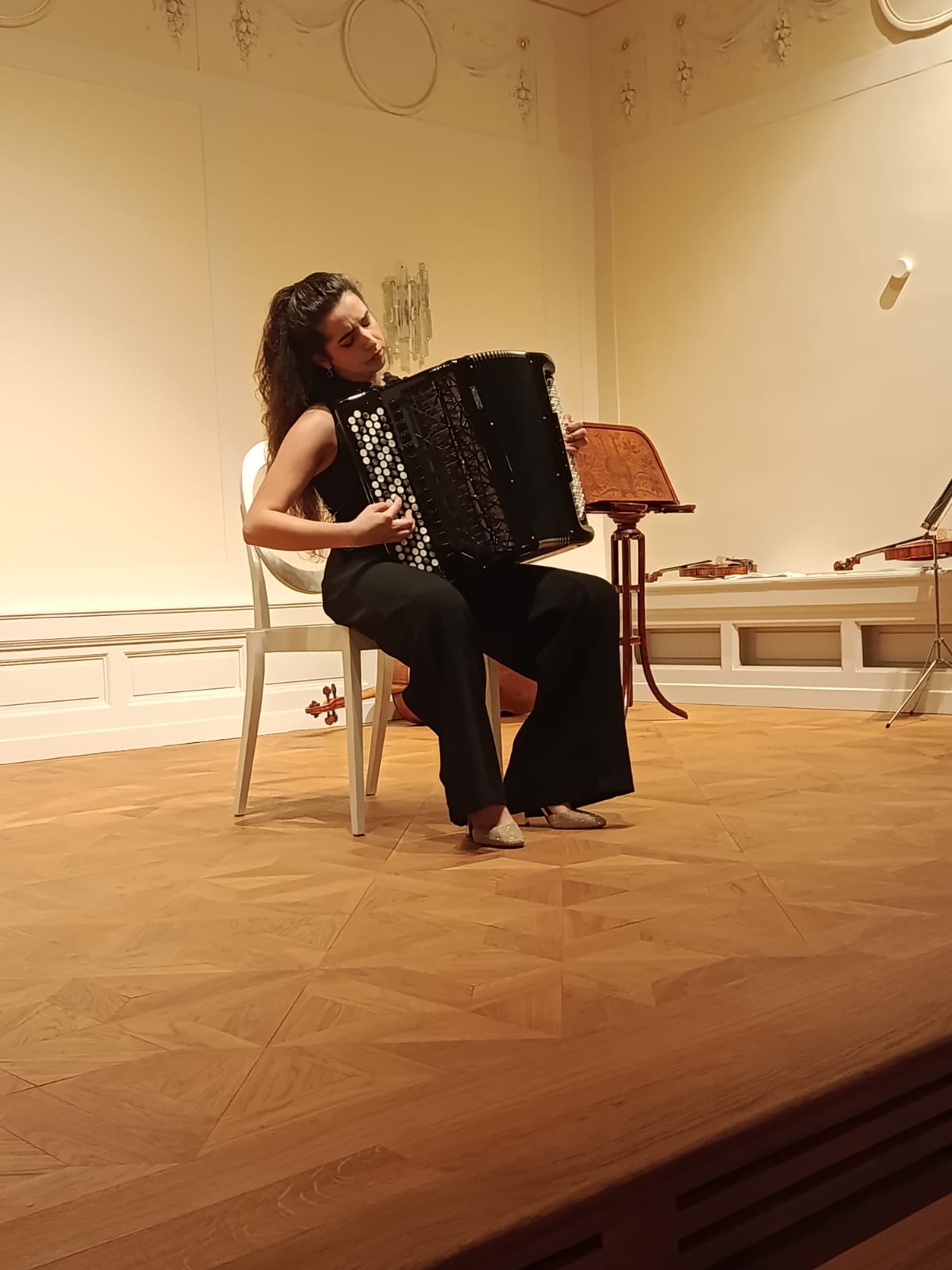
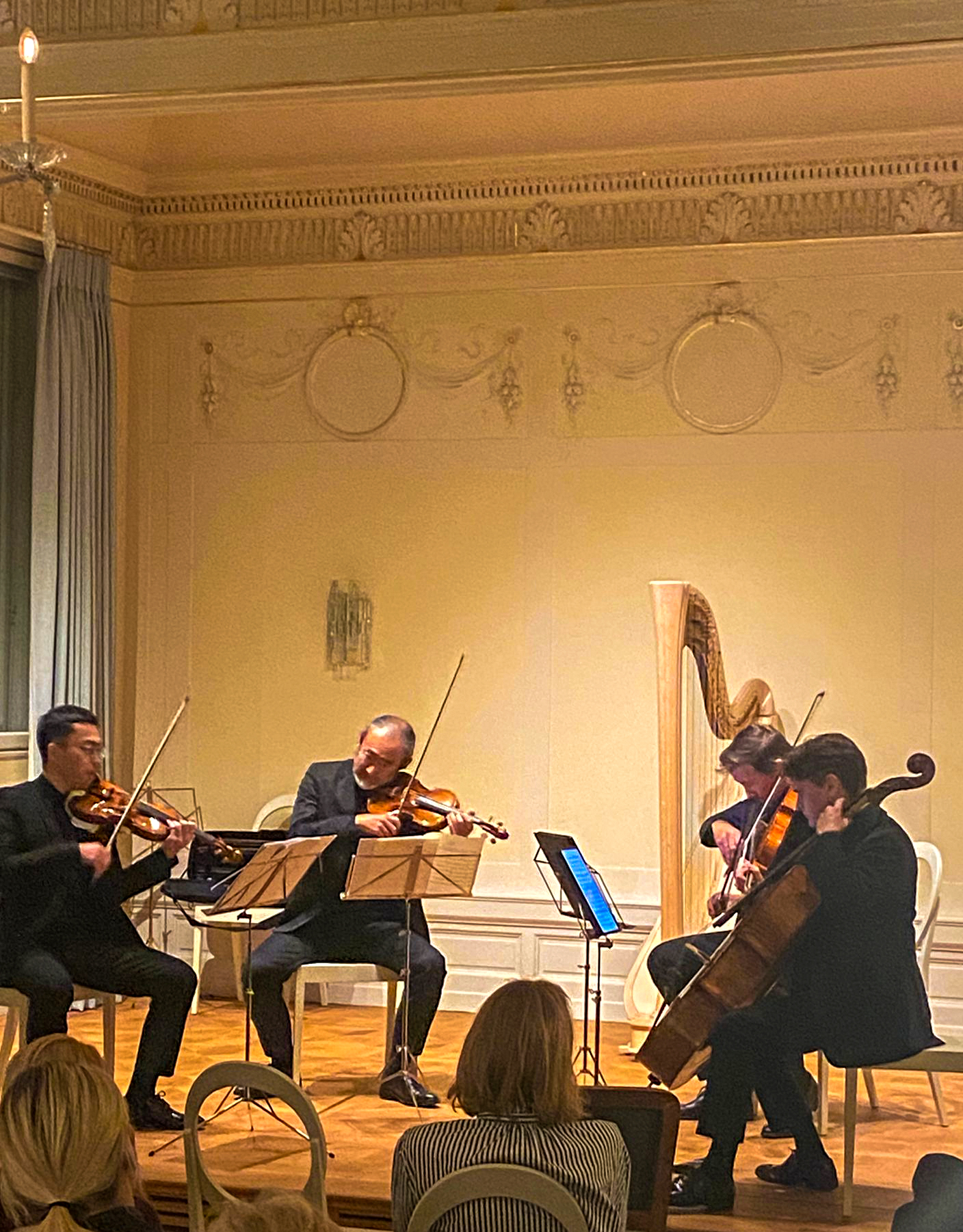
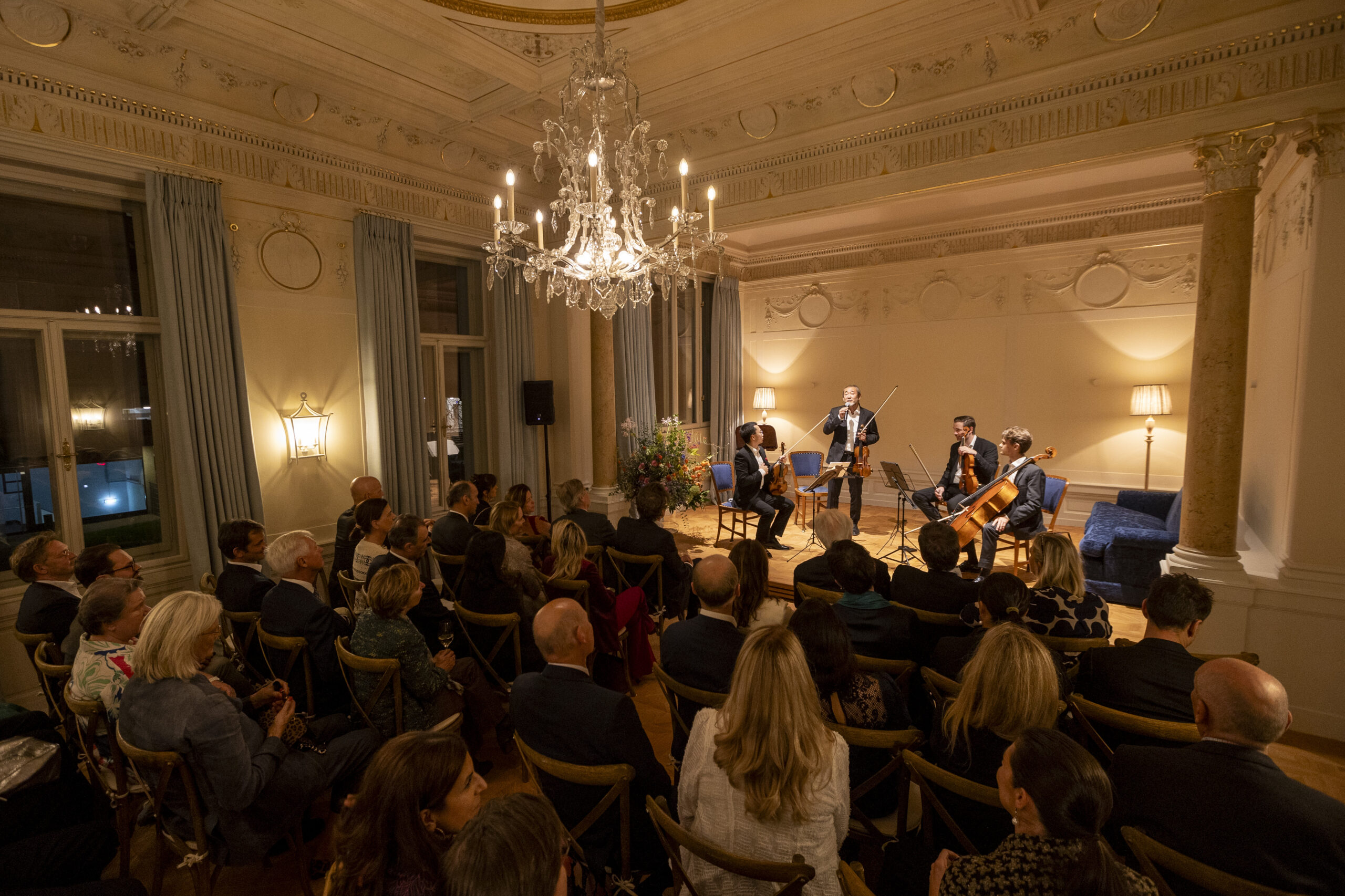
The Forum String Quartet, under the musical direction of Joji Hattori, opened the evening with a piece by Felix Mendelssohn Bartholdy. Afterwards, we were delighted to welcome the Spanish accordionist Sofia Ros. The young musician, who visits hospitals, nursing homes, and schools to bring joy to those around her through music made a clear statement about the importance of caring more for one another and giving back to society. This gives us something in return – a purpose in life.
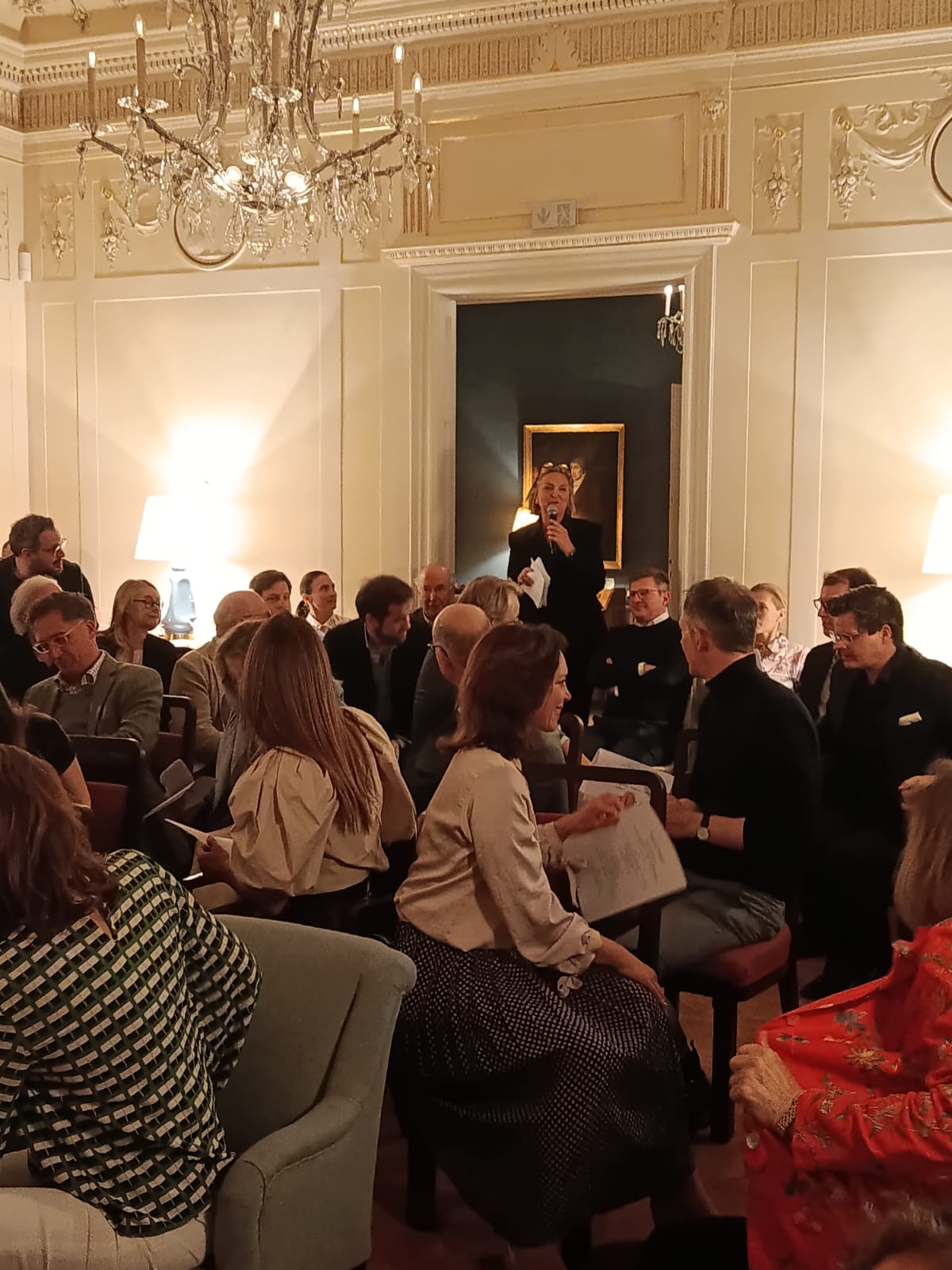
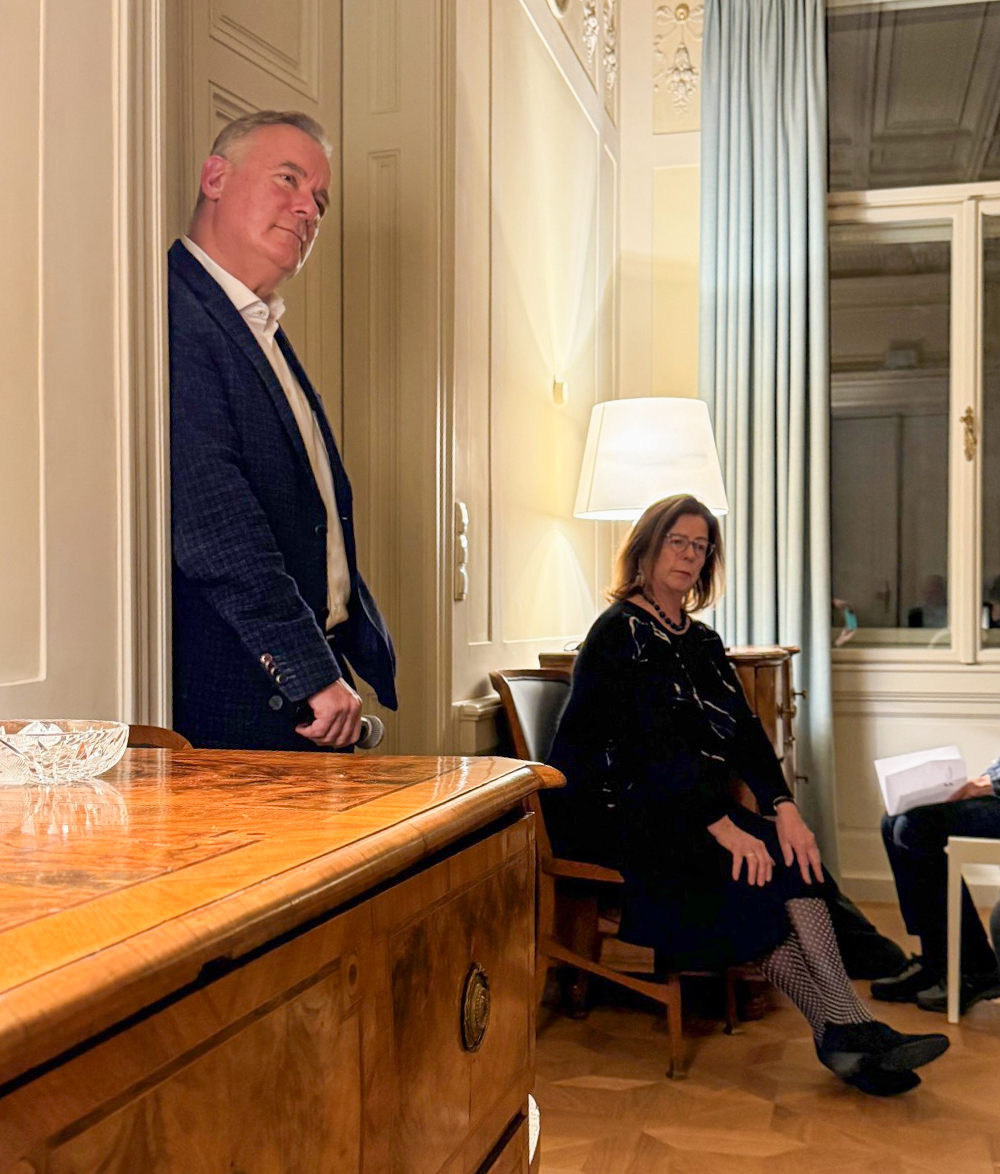
Author and philosopher Lisz Hirn illustrated what defines humanity in a highly technological world and how we can nevertheless shape the future in a humane way. The audience engaged in a lively discussion during the following Q&A session about the extent to which individuals and society as a whole can choose to prioritize human interaction.
In the end the Forum String Quartet and Sofia Ross performed a piece by Astor Piazzolla. We thank the artists, Lisz Hirn, and the audience who transformed this evening into a true dialogue, perfectly embodying the spirit of human interaction.
April
2026
The Age of Depopulation – Your Voice for Tomorrow’s Job Market 3
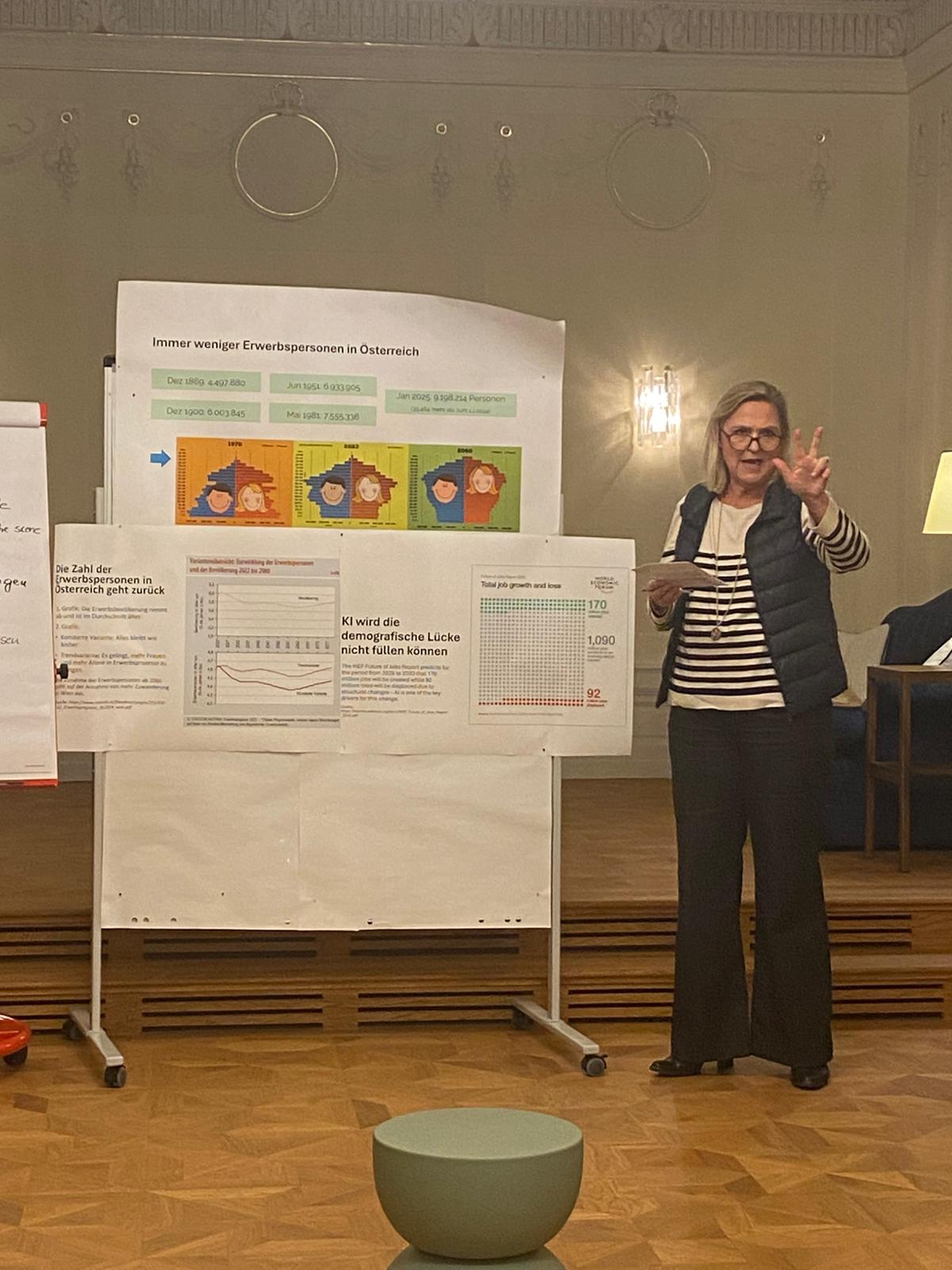
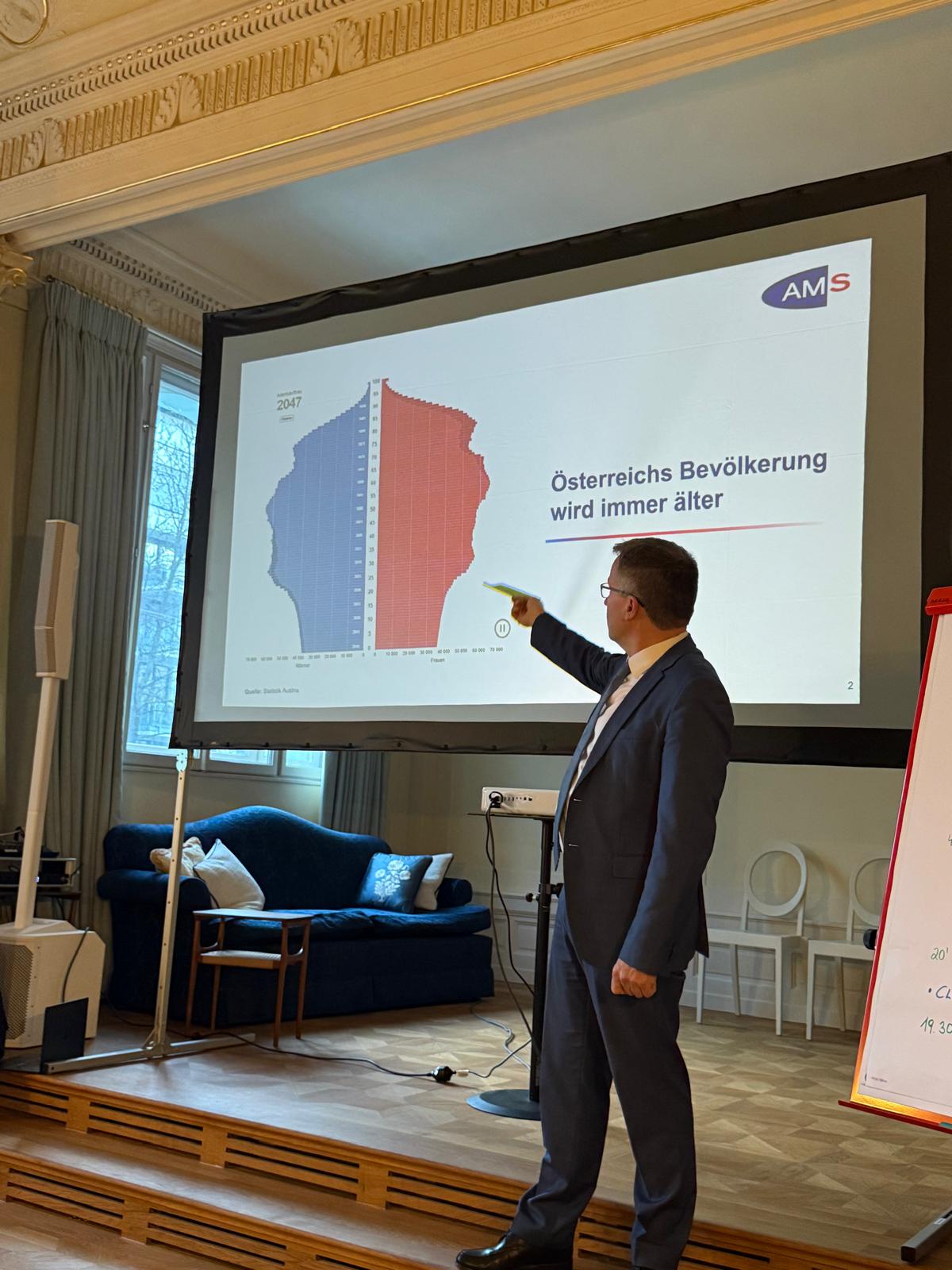
At our third roundtable, Dr. Johannes Kopf (AMS) opened with a sharp overview of Austria’s demographic shift and the growing labor shortage.
Many CEOs are already taking action. To make these efforts more visible, we highlighted best practices from two leading CEOs: David Pötz (Vinzenz Clinics Vienna) and Victor Breguncci (AMAG), who shared concrete solutions from their organizations.
In a focused discussion, 20 entrepreneurs and experts committed to exploring how to better attract and retain low- and middle-skilled workers. The key themes were: stronger use of existing alliances, leading by example, and reducing bureaucratic hurdles. The next step will be small working groups to develop targeted, practical solutions. We thank everyone for the valuable input.
March
2026
Premiere of the Forum Razumovsky at the World Economic Forum in Davos
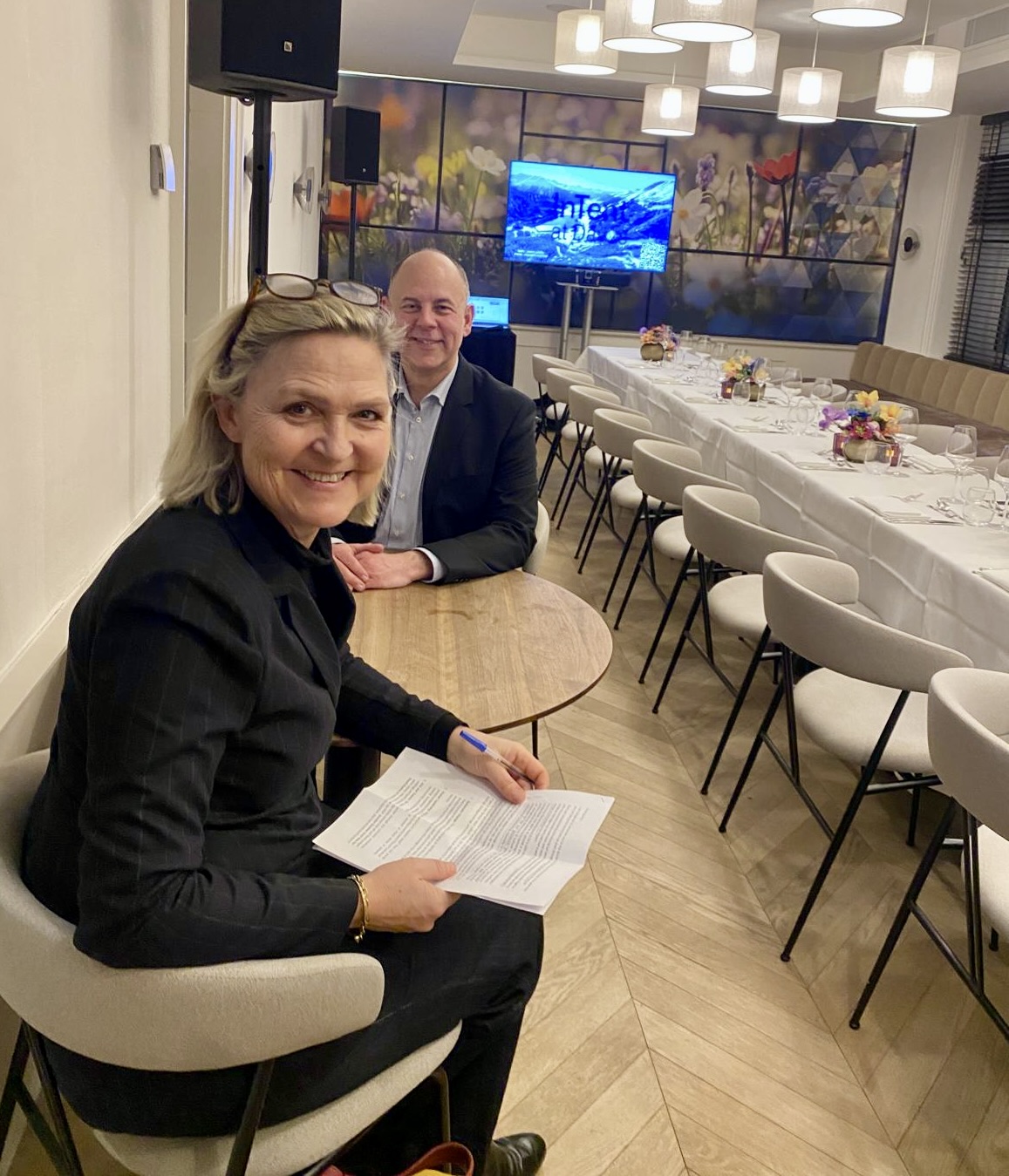
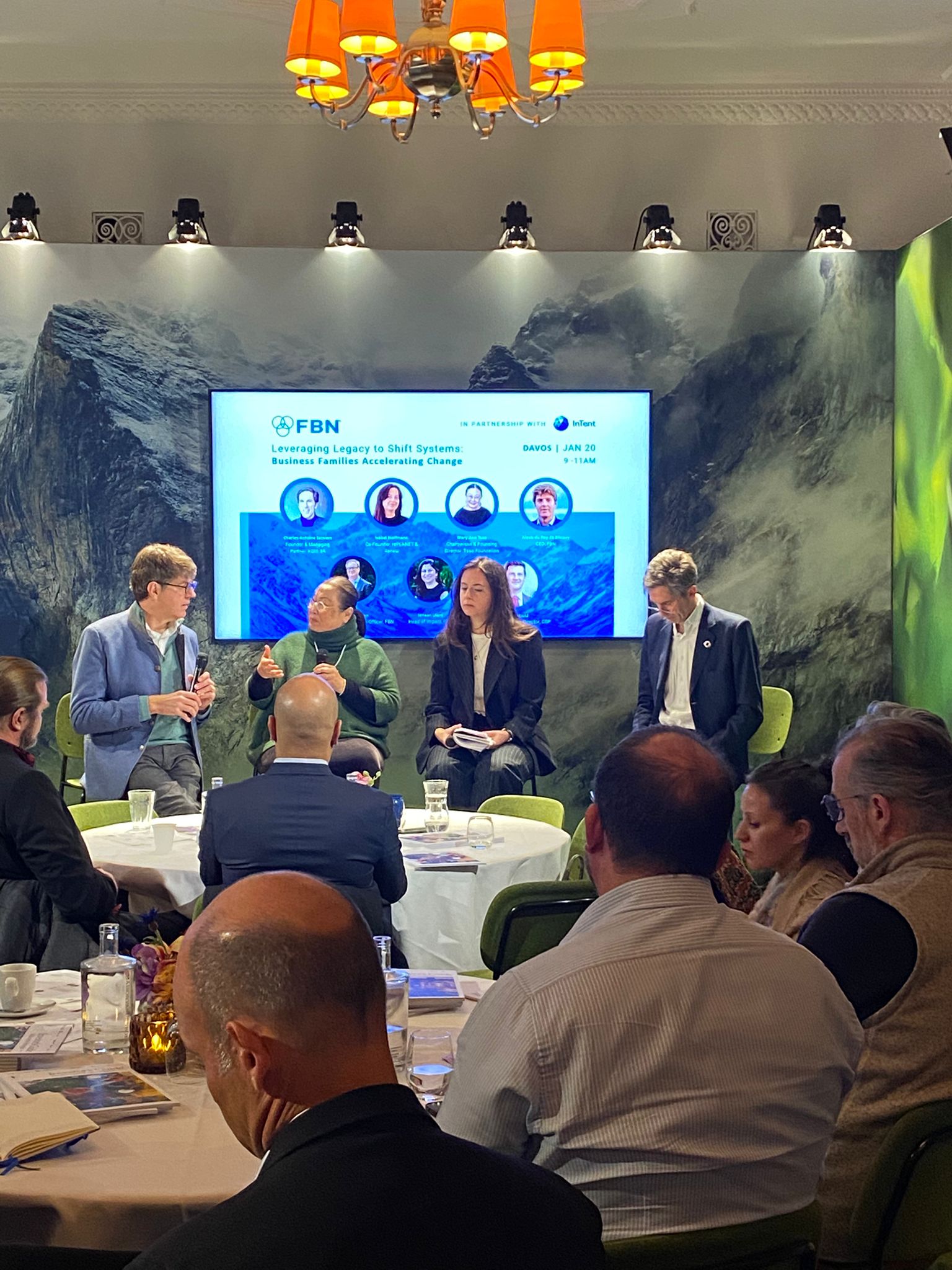
At the World Economic Forum in Davos, InTent hosted a dinner for the Forum Razumovsky under the motto “Conversation for Impact.”
Twenty leaders from business, education, and security discussed how to strengthen Central Europe’s role in Europe. At its Davos debut, the Forum Razumovsky highlighted its role as a bridge-builder and its commitment to giving Central European changemakers a stronger voice at the World Economic Forum.
A key focus was Human Leadership, emphasizing the need for a more human-centered leadership approach and stronger collaboration across Europe.
We thank InTent and all participants and look forward to future collaborations in Davos and beyond.
January
2026
The Art of Communicating Together – A Small School of Democracy
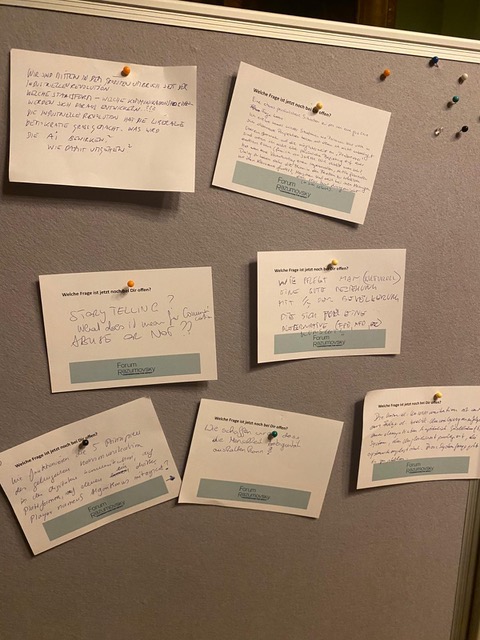
The quality of our communication shapes the quality of our lives. Bernhard Pörksen, Professor of Media Studies at the University of Tübingen, addressed a full audience on the evolving art of dialogue. In an age when discussions often turn into arguments and people retreat into silos, connecting with one another has become more important than ever. But how do we engage those who seem unreachable?
Professor Pörksen’s approach to dialogue blends empathy with clear, respectful confrontation and is guided by five key principles, including appreciation, perspective-sharing, and non-egocentric discussion.
His insightful keynote was followed by a dynamic Q&A session, the questions from which will inform the content of upcoming roundtables on this topic. We extend our gratitude to all participants for bringing their enthusiasm and thoughtful contributions to this memorable evening.
November
2025
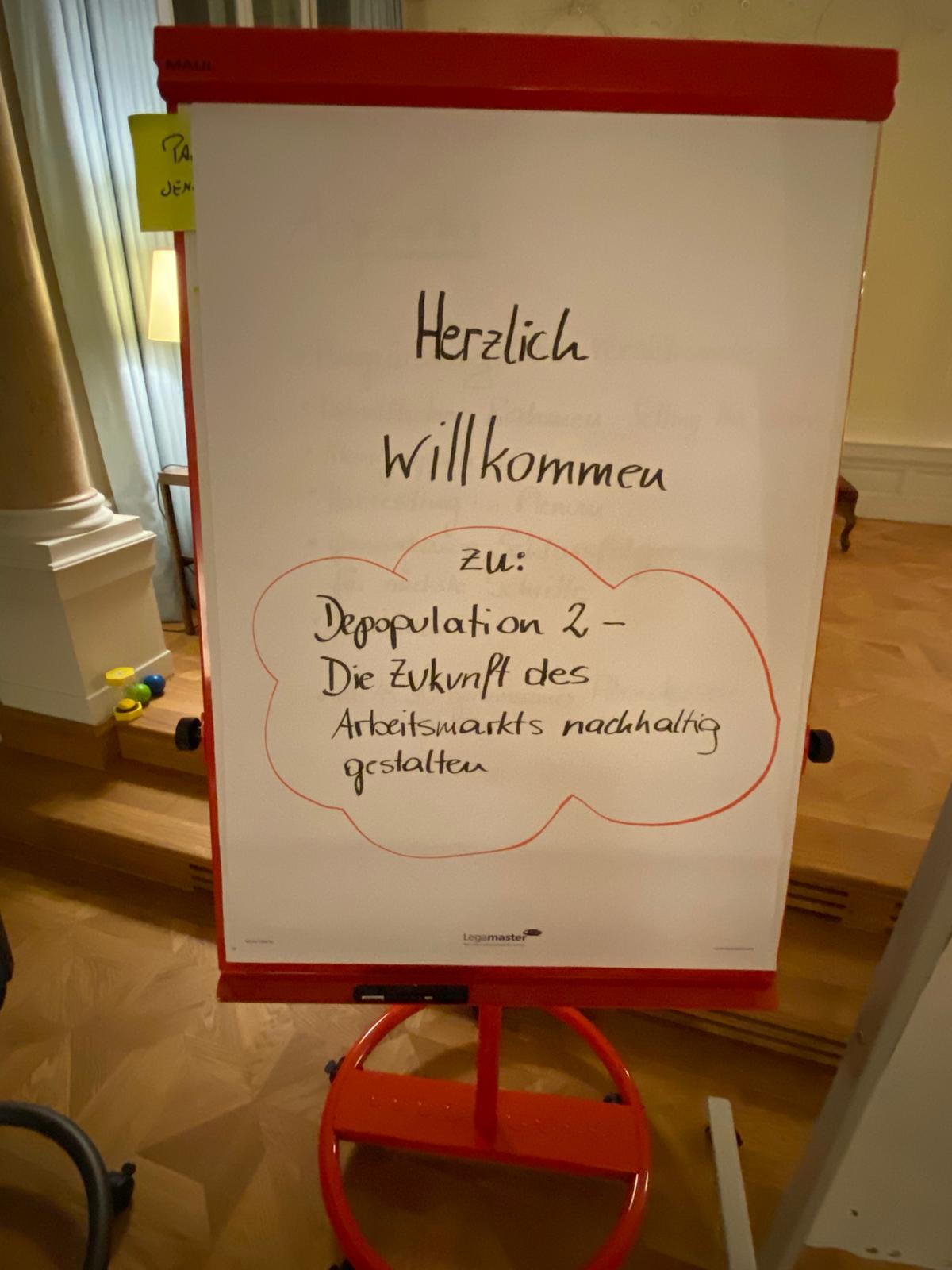
The Age of Depopulation – Your Voice for Tomorrow’s Job Market 2
In the second workshop we welcomed both to business leaders and labor-market integration experts. Working in small groups, we explored strategies to bring more women, immigrants, and older adults into the workforce — an essential step to addressing future labor shortages.
The discussion underscored the responsibility companies have to actively support these groups and highlight their success stories. Visibility inspires action: leading by example encourages others to follow.
We thank all participants for their insights and look forward to continuing the series next spring.
November
2025
Music & Dialogue: “Idealism vs. Ideology”
Music & Dialogue: “Idealism verus Ideology”
Our opening evening of our “Music and Dialogue” series focused on “Idealism versus Ideology.”
Conductor Joji Hattori, Artistic Director of the Vienna Opera Summer, began by describing idealism as a form of altruism. Under his direction, the Forum String Quartet performed Dvořák’s String Quartet in E-flat major, Op. 51.
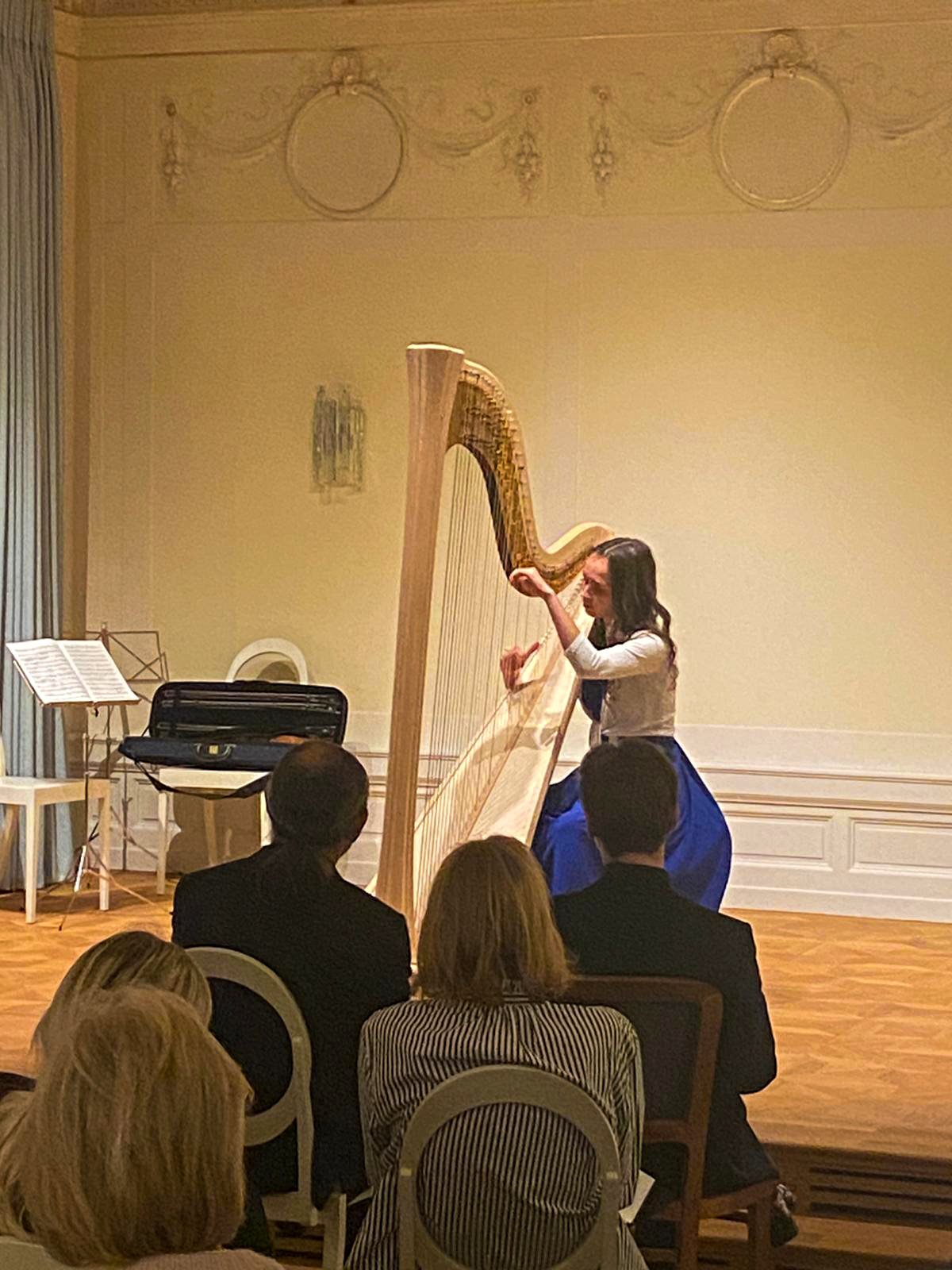
Harpist Nadja Floder impressed the audience with Marcel Grandjany’s Rhapsody, Op. 10, and her own composition, “Longing for Eternity.” She reflected on creating lasting value for society and finding meaning through the balance of idealism and ideology.
Author Ilija Trojanow followed with a keynote on the disappearance of utopias in today’s world, urging a rediscovery of idealism. A lively audience discussion and Schoenberg’s “Notturno for Strings and Harp” concluded the evening, which continued informally over a get-together.
We thank all participating artists and guests for making this opening a true evening of music and dialogue.
October
2025
Healthier soils for future generations 2
Healthier Soils for Future Generations
At our second “Healthier Soils for Future Generations” workshop, we brought together farmers, NGOs, and food producers for an inspiring exchange.
Together, we discussed how to grow and produce food in healthier, more sustainable ways — through stronger cooperation, better consumer awareness, and less food waste.
A key takeaway: we need to inform the consumers, only they can drive real change. More transparency about farming costs, ecological services, and finding new ways of connecting consumers and producers are essential and can have real impact.
Thank you to all participants for your ideas, commitment, and collaboration. We’re already looking forward to continuing the dialogue in spring 2026!
October
2025
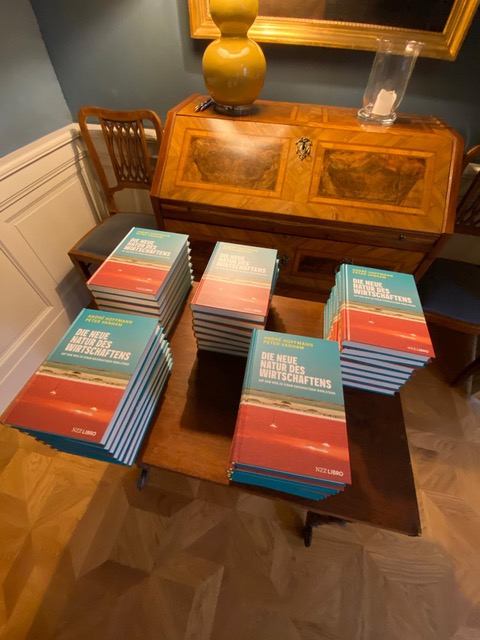
Book Presentation: “The New Nature of Business” by André Hoffmann
On September 9th. and 10th., André Hoffmann, Vice President of Roche and Co-Founder of the Forum Razumovsky, presented his new book “The New Nature of Business”.
On the first evening, marking the 15th anniversary of “Zirkel Familienunternehmen exklusiv,” we welcomed leading Austrian family businesses. André Hoffmann shared insights on the responsible use of natural resources and highlighted the important role and leadership family businesses play in society.
On the second evening, André Hoffmann discussed the responsible use of natural resources and the role of leading businesses in society. In conversation with Andreas Treichel, Chairman of the Supervisory Board of ERSTE Foundation, he explored how leaders can redefine the relationship between business, nature, and society. The motivating discussion highlighted the links between economy, politics, and social responsibility, as well as the importance of strengthening democracy for a sustainable future.
September
2025
The Age of Depopulation
In June, we kicked off our dialogue series “The Age of Depopulation – Your Voice for the Labor Market of the Future”. Together with top business leaders, we explored how to tap into new talent pools and proactively shape the future of work in light of Europe’s demographic shifts. This change represents a profound social, economic, and political challenge, the scope of which has often been underestimated.
Public awareness of the impacts of depopulation is still too low. The next steps should therefore address three key levels: strengthening social debate, leveraging corporate responsibility, and demanding political leadership.
The dialogue continues this autumn, focusing on practical solutions and new approaches. An expanded group of participants will work together to explore how we cannot only manage depopulation, but also use it as an opportunity.
June
2025
Healthier soils for future generations
Healthier soils for future generations.
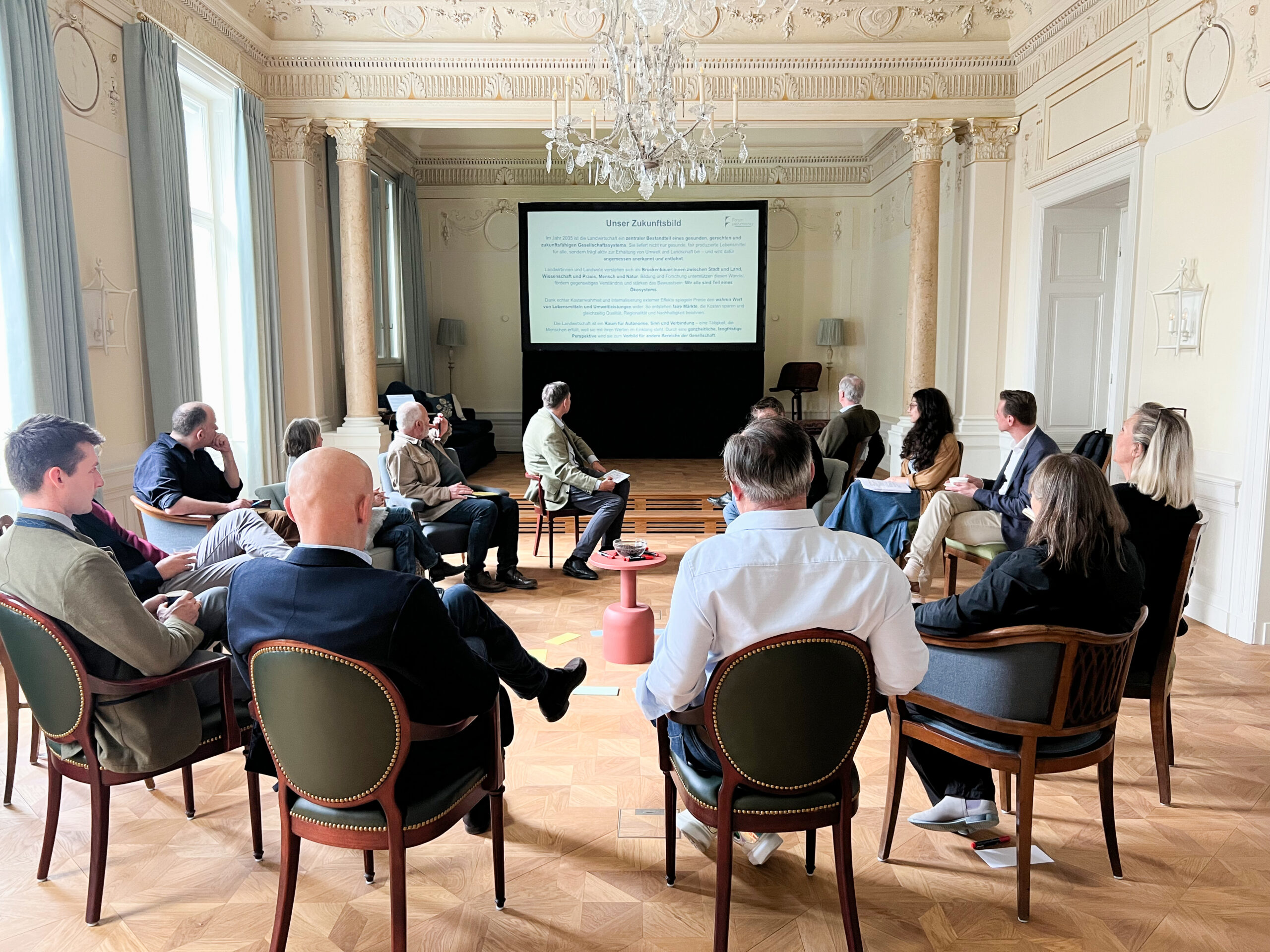
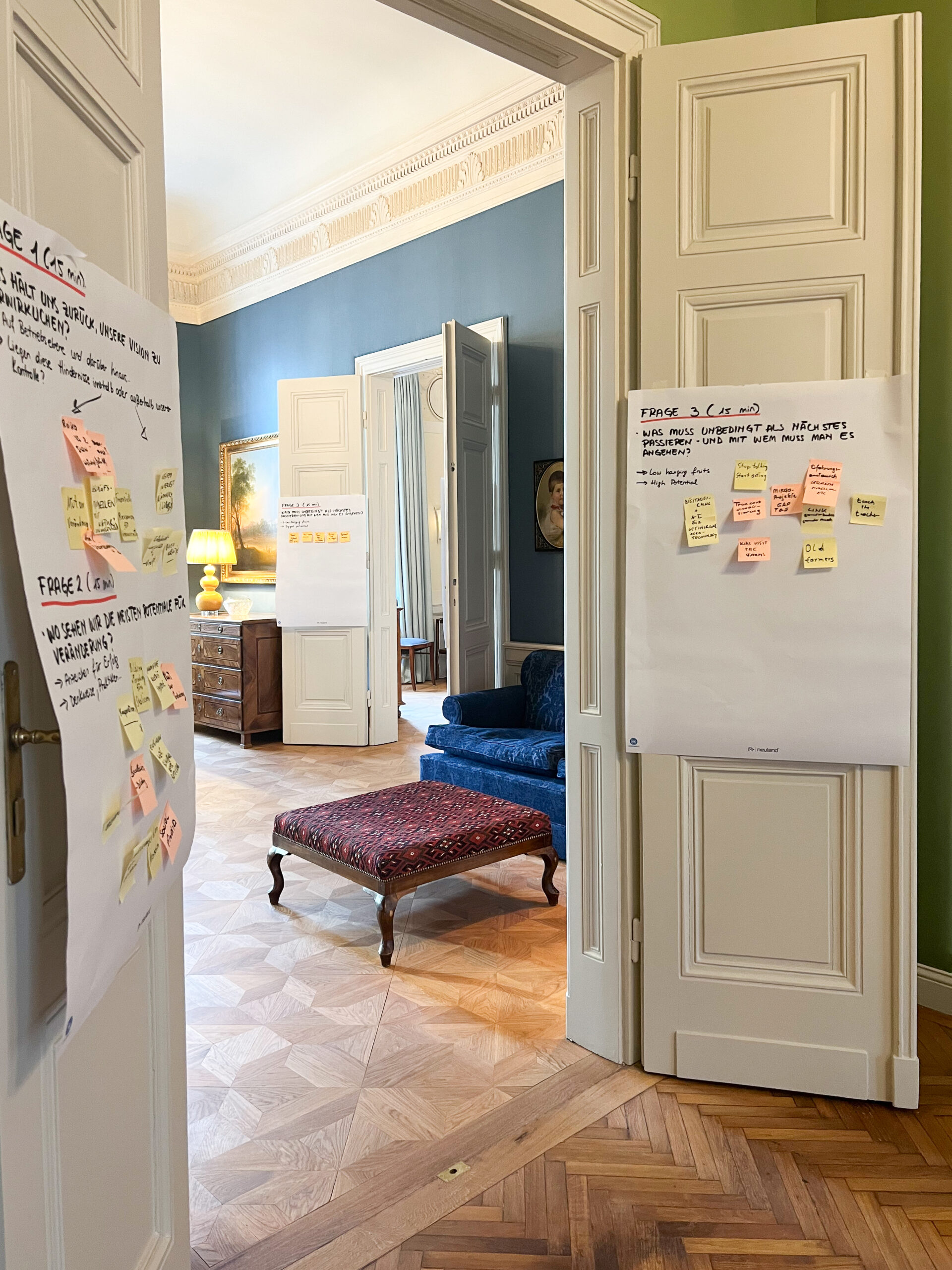
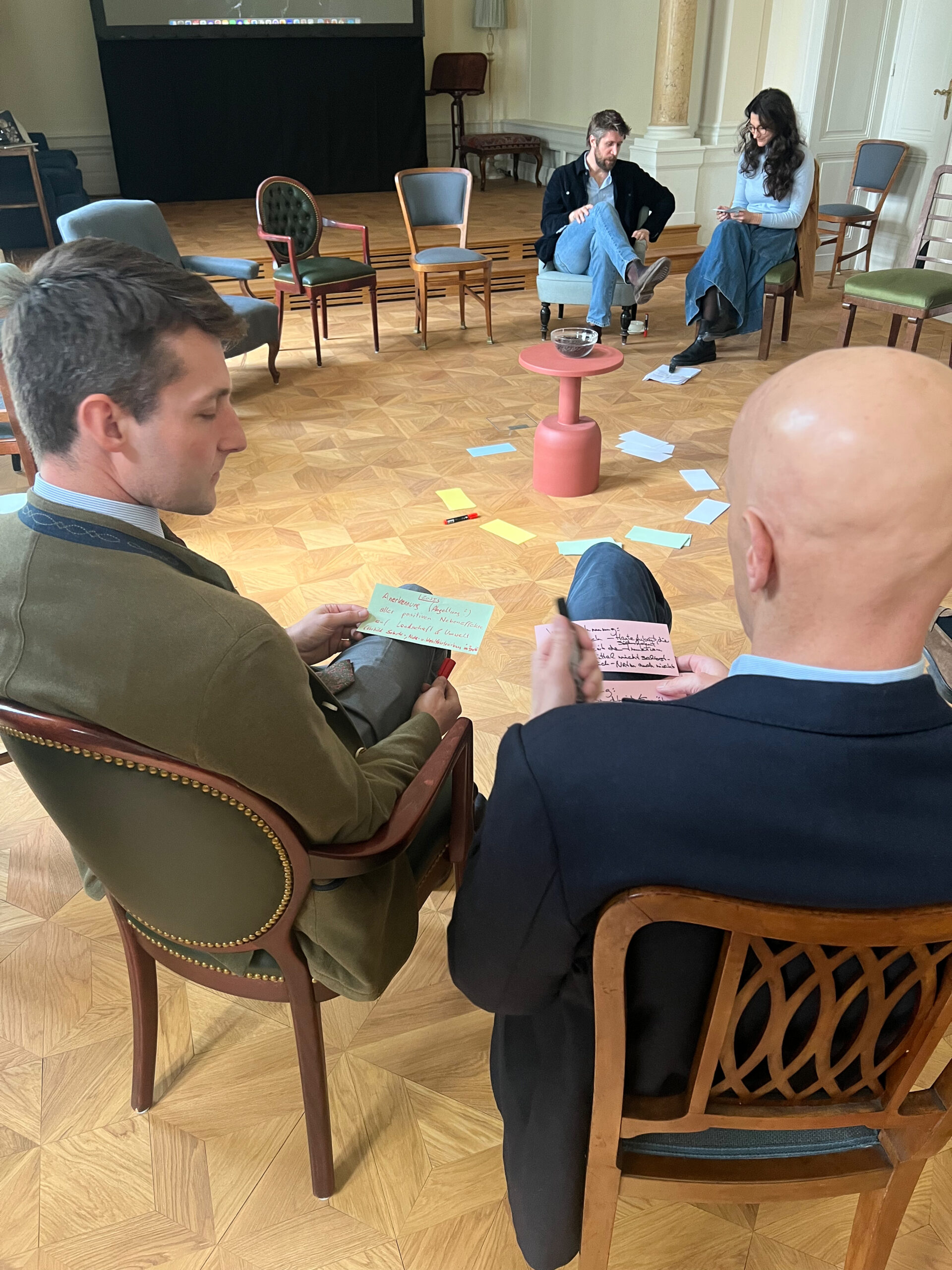
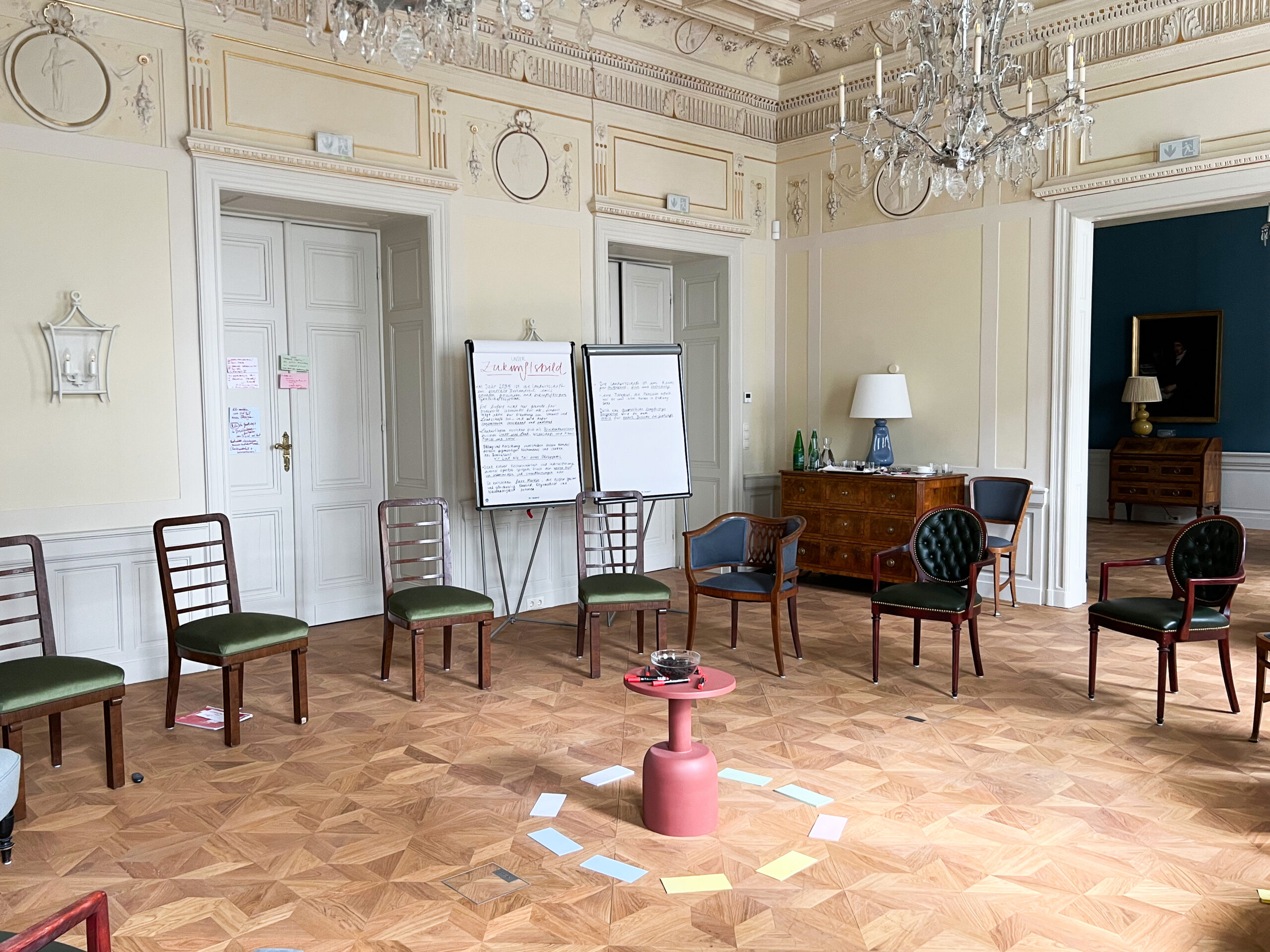
On March 27th, we put farmers at the center of the discussion in our first workshop, “Healthier Soil for Future Generations.” Starting at the root of the value chain, we developed a shared vision for a sustainable bio-economy and identified key challenges.
This includes the urgent repositioning of agriculture in the center of society, increasing the visibility of its ecosystem services, and ensuring true costs. New ways toward cooperation and transparency, as well as education and training, must also be found.
In the next session, key stakeholders will join us to explore actionable solutions. This event launched an ongoing series, and we appreciate everyone’s dedication to driving change.